
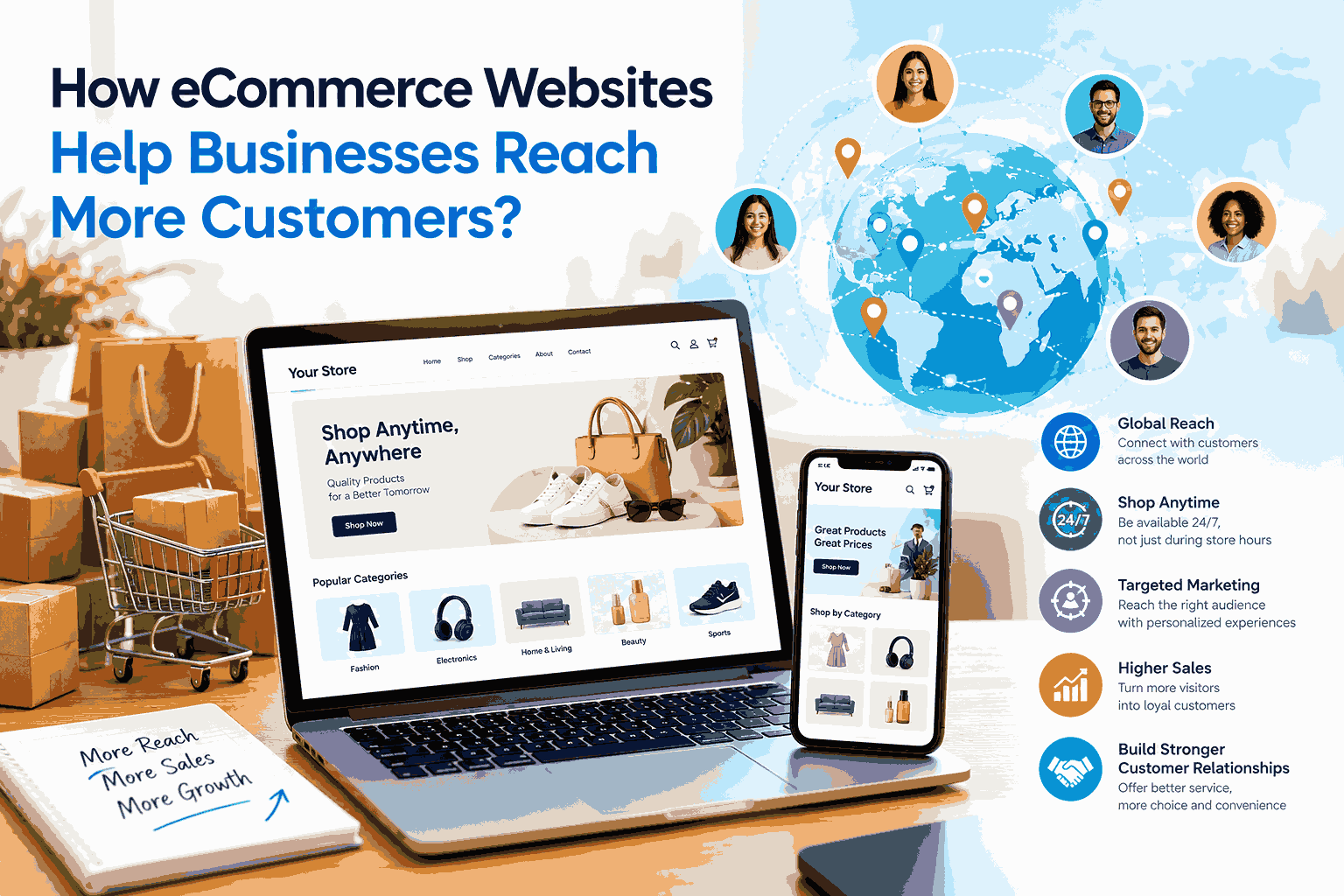
Shopping habits have changed for good. Today, customers search on their phones, compare prices in seconds and buy without stepping into a shop. For businesses, this shift is a big opportunity. An eCommerce website lets you meet customers where they already spend their time: online.
Whether you run a small local store or a growing brand, a well-built eCommerce website can take your products far beyond your neighbourhood. Here is how it helps you reach more customers, and why it has become a must-have for modern businesses.
1. Your Store Stays Open 24/7
A physical shop has opening hours. An eCommerce website does not. Customers can browse, compare and buy at midnight, during a lunch break or on a Sunday morning. This round-the-clock availability captures buyers who could never visit your store during working hours, such as night-shift employees, busy parents and people in different time zones. More open hours mean more chances to make a sale.
2. Reach Customers Beyond Your Location
A brick-and-mortar business depends on foot traffic from its surrounding area. An online store removes that limit. A handmade-crafts seller in a small town can ship to customers in another city, state or even another country. With reliable courier partners and clear shipping policies, your market grows from a few thousand local shoppers to millions of potential buyers.
3. Get Discovered Through Search Engines
Most buying journeys begin with a search. When your website is optimised for search engines, your products appear when people look for exactly what you sell. Well-written product pages, relevant keywords, fast loading speed and helpful blog content all improve your visibility. Unlike a shop sign that only nearby people see, strong SEO keeps bringing in fresh, interested visitors every day, often at a lower cost than traditional advertising.
4. Connect With Customers on Social Media
Social platforms such as Instagram, Facebook, Pinterest and YouTube are now powerful shopping channels. An eCommerce website works as the home base for all of them. You can link products directly from your posts, run shoppable ads and turn followers into paying customers. When a customer clicks a post and lands on a product page, the path from discovery to purchase becomes short and simple.
5. Use Data to Understand and Target Customers
One of the biggest advantages of selling online is access to data. Analytics tools show you which products are popular, where visitors come from, which pages they leave and what makes them buy. With these insights you can:
- Personalise offers: recommend products based on browsing and purchase history.
- Retarget visitors: show ads to people who viewed a product but did not buy.
- Improve campaigns: spend your marketing budget on channels that actually convert.
- Predict demand: stock the right products at the right time.
This level of targeting is very hard to achieve in a traditional store.
6. Build Trust With Reviews and Secure Payments
New customers often hesitate to buy from a brand they do not know. Customer reviews, ratings and testimonials on your website reduce that doubt by showing real experiences. Add secure payment gateways, multiple payment options such as UPI, cards, net banking and wallets, and clear return policies, and buyers feel confident enough to complete the purchase. Trust leads to conversions, and conversions lead to word-of-mouth growth.
7. Tap Into the Mobile-First Shopper
A large share of online shopping now happens on smartphones. A responsive, mobile-friendly eCommerce website gives these customers a smooth experience with easy navigation, quick checkout and fast page loads. In markets like India, where mobile internet use continues to rise rapidly, a mobile-ready store helps you reach first-time online buyers in smaller towns and cities who might never have seen your business otherwise.
8. Keep Customers Coming Back
Reaching more customers is not only about finding new ones. It is also about keeping the ones you have. An eCommerce website makes it easy to build lasting relationships through email newsletters, WhatsApp updates, loyalty points, discount codes and abandoned-cart reminders. Repeat customers spend more, cost less to serve and often recommend your brand to friends and family.
9. Lower Costs and Easier Scaling
Running an online store usually costs less than opening additional physical outlets. You save on rent, utilities and large staff teams, and you can reinvest those savings into marketing, product quality or customer service. As demand grows, you can add new products, launch seasonal sales or expand to marketplaces without rebuilding your business from scratch.
Tips to Get the Most From Your eCommerce Website
- Keep the design clean: simple navigation and clear product images help visitors decide faster.
- Write useful product descriptions: answer questions before customers have to ask.
- Speed up your site: slow pages drive shoppers away.
- Simplify checkout: fewer steps mean fewer abandoned carts.
- Offer support: live chat, WhatsApp or quick email replies build confidence.
- Track and improve: review your analytics regularly and keep testing new ideas.
Conclusion
An eCommerce website is far more than an online catalogue. It is a sales channel that never closes, a marketing platform that reaches people across the world and a source of data that helps you serve customers better. From search engine visibility and social media selling to secure payments and loyalty building, every feature works together to bring more people to your brand.
If you want to grow your customer base, now is the right time to build or upgrade your online store. Start with a fast, mobile-friendly website, focus on a great customer experience, and watch your reach grow beyond what a physical shop alone could ever achieve.