
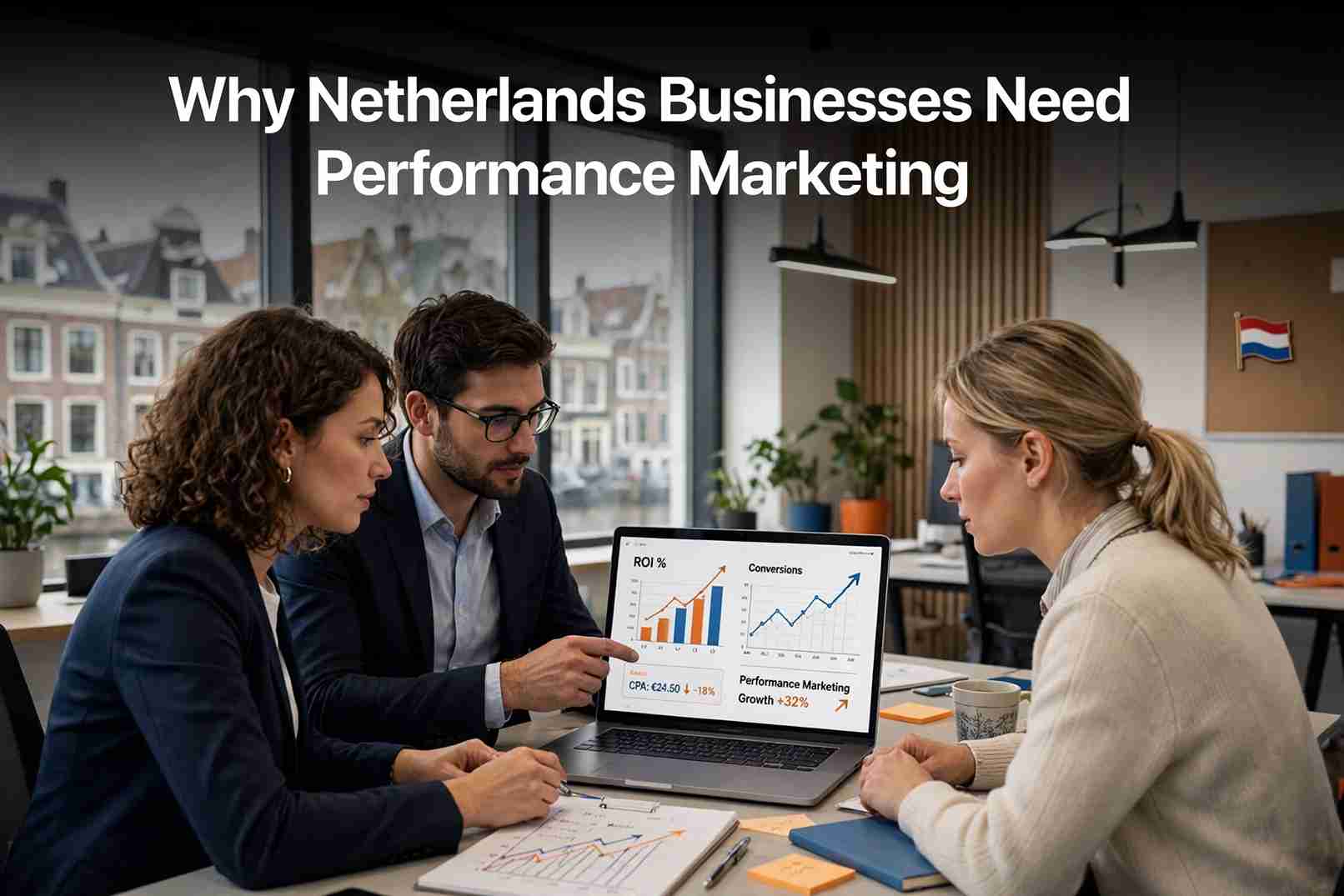
The Netherlands
is one of the most digitally connected countries in Europe. Consumers research
online, compare prices in seconds and expect a smooth checkout in their own
language. For businesses, that is both a huge opportunity and a serious
challenge. Competition is intense, ad costs keep rising and every euro of
marketing budget is expected to prove its worth.
This is exactly
where performance marketing comes in. Instead of paying for exposure and hoping
for results, you pay for measurable actions: clicks, leads, sign-ups and sales.
Here is why more Dutch companies are making it the core of their growth strategy.
1. A Highly Digital, Highly Competitive Market
Dutch shoppers
are comfortable buying online, from fashion and electronics to travel and
financial services. Local marketplaces, international giants and thousands of
niche webshops all fight for the same attention. Standing out through brand
awareness alone is slow and expensive.
Performance
marketing lets you compete smartly. By targeting people who are already
searching for what you sell, you reach buyers at the moment of intent rather
than spreading your budget across a broad audience.
2. Every Euro Is Measurable
Traditional
advertising makes it hard to answer a simple question: what did this campaign
actually deliver? Performance marketing removes that guesswork. With analytics,
conversion tracking and attribution tools, you can see which channel, keyword,
audience and creative produced each result.
Key metrics
such as cost per acquisition (CPA), return on ad spend (ROAS), customer
lifetime value and conversion rate give Dutch business owners the clarity to
scale what works and cut what does not. For small and mid-sized companies
watching their budgets closely, that transparency is a major advantage.
3. Rising Ad Costs Demand Smarter Spending
As more brands
move online, the cost of reaching customers on search and social platforms
continues to climb. Businesses that run campaigns without constant optimisation
quickly find their budgets drained by low-quality traffic.
Performance
marketing is built around continuous improvement. A/B testing of ads and
landing pages, bid adjustments, audience refinement and negative keyword
management all work together to lower your acquisition costs over time. The
result is more customers from the same budget.
4. Reaching Customers Across Every Channel
The Dutch
customer journey rarely follows a straight line. Someone might discover your
brand on social media, compare options on Google, read reviews and finally
convert after a retargeting ad or an email reminder. Performance marketing
connects these touchpoints through a coordinated mix of:
•
Search advertising (PPC): capture high-intent
demand on Google and Bing.
•
Paid social: reach precise audiences on Meta,
LinkedIn, TikTok and more.
•
Shopping and marketplace ads: put products in
front of ready-to-buy shoppers.
•
Retargeting: bring back visitors who did not
convert the first time.
•
Affiliate and email marketing: add
performance-based reach and nurture existing leads.
Because every
channel is tracked, you can see how they support each other and allocate budget
where it delivers the strongest return.
5. Ideal for Export and Cross-Border Growth
The Netherlands
has a strong trading tradition, and many Dutch businesses sell across borders
into Germany, Belgium, the wider EU and beyond. Performance marketing makes
international expansion far less risky. You can test a new market with a small
budget, localise messaging, measure demand and scale only when the numbers
justify it.
This low-risk,
data-first approach suits ambitious Dutch startups and established exporters
alike.
6. Privacy Rules Reward First-Party Data and Smart Tracking
Dutch and
European consumers value privacy, and regulations such as the GDPR set clear
rules for how data is collected and used. As third-party cookies fade and
consent requirements tighten, businesses need a modern approach to tracking.
A good
performance marketing strategy builds on consent-based measurement, server-side
tracking and first-party data such as email lists and customer records. This
keeps your campaigns compliant, protects customer trust and still delivers the
insights needed to optimise.
7. Faster Results and Faster Learning
Brand campaigns
can take months to show their impact. Performance campaigns can generate leads
and sales within days, and just as importantly, they generate data right away.
You quickly learn which messages resonate with Dutch audiences, which offers
convert and which pages cause visitors to drop off.
That speed of
learning is a competitive edge. Each test makes the next campaign stronger, and
the gains compound over time.
How to Get Started
If you are new
to performance marketing, begin with a few practical steps:
•
Define clear goals: decide whether you want
sales, qualified leads or app installs, and set target CPA or ROAS figures.
•
Set up proper tracking: install analytics and
conversion tracking before spending anything.
•
Start with high-intent channels: search and
retargeting often deliver the fastest wins.
•
Optimise your landing pages: fast,
mobile-friendly pages with a clear call to action turn clicks into customers.
•
Test, review and scale: check results regularly,
then increase budget on what performs.
Many businesses
also work with a specialised performance marketing agency to speed up this
process and avoid costly early mistakes.
Final Thoughts
In a market as
digital and competitive as the Netherlands, guessing is no longer an option.
Performance marketing gives Dutch businesses accountability, speed and control,
turning marketing from a cost centre into a predictable growth engine.
If you want to
attract more customers, lower your acquisition costs and prove the value of
every euro you spend, now is the time to make performance marketing a central
part of your strategy.