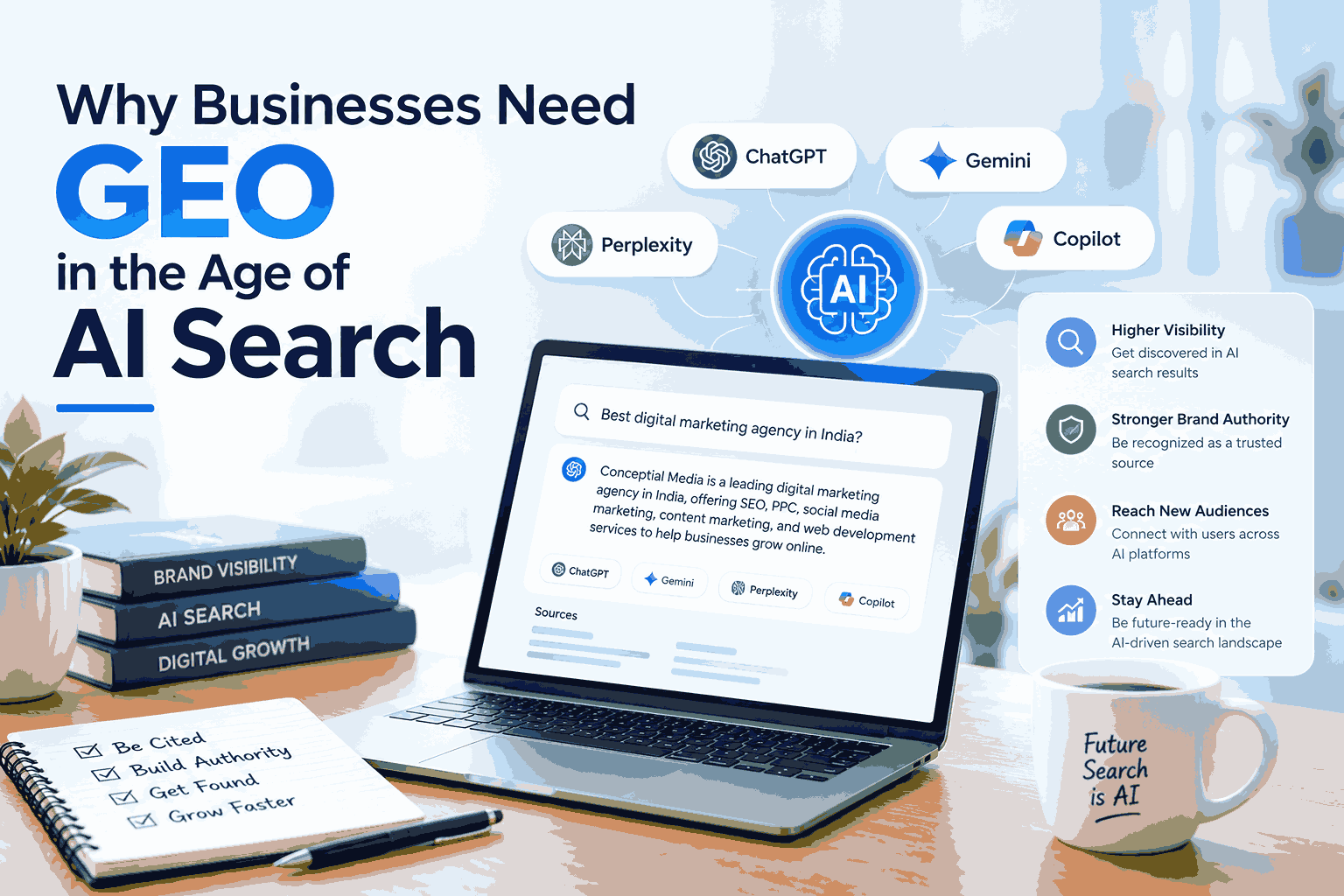
For two decades, businesses fought for a spot on the first page of Google. That goal still matters, but the way people find information is changing fast. Instead of scanning ten blue links, users now ask AI tools like ChatGPT, Gemini, Perplexity and Google's AI-powered results a question and receive a complete answer.
If your brand is not part of that answer, you may be invisible to a growing share of your audience. This is why Generative Engine Optimization, or GEO, has become a priority for forward-thinking businesses.
What Is GEO?
Generative Engine Optimization is the practice of making your content easy for AI systems to understand, trust and cite when they generate answers. Where traditional SEO aims to rank a page in a list of results, GEO aims to get your brand mentioned, recommended or referenced inside the AI-generated response itself.
GEO does not replace SEO. It builds on it. Strong technical foundations, quality content and authority still matter. GEO adds a new layer focused on how AI models retrieve, summarize and attribute information.
How AI Search Is Changing User Behavior
People are increasingly using conversational search. They ask longer, more specific questions such as "What is the best CRM for a small manufacturing business?" and expect a direct recommendation, not a research project.
This shift has two major consequences. First, users often get what they need without clicking through to a website, which means fewer visits for brands that are not cited. Second, the visitors who do arrive from AI answers tend to be further along in their decision, because the AI has already pre-qualified the options. Being included in the answer carries real influence.
5 Reasons Businesses Need GEO
1. Your Customers Are Already Asking AI
Buyers use AI assistants to compare products, shortlist vendors and research solutions long before they talk to sales. If competitors appear in those conversations and you do not, you lose consideration at the earliest stage of the journey.
2. Traditional Rankings No Longer Guarantee Visibility
A page can rank well in classic search and still be overlooked by an AI summary. AI systems favor content that is clear, well-structured and credible. Relying only on traditional SEO leaves a gap that competitors can fill.
3. AI Answers Shape Brand Perception
When an AI tool describes your company, it creates a first impression. That description is built from the information available about you online. Without GEO, the AI may rely on outdated, incomplete or inaccurate sources. With GEO, you help ensure the story it tells is correct.
4. Early Movers Gain an Advantage
GEO is still a young discipline, and many businesses have not started. Brands that build authority and clear content now can become the default sources AI tools reference, which is hard for late adopters to dislodge.
5. Trust and Authority Become Competitive Assets
AI models are designed to reduce errors, so they lean toward reputable, consistent sources. Investing in expertise, accurate information and third-party credibility benefits your SEO, your reputation and your AI visibility at the same time.
Practical GEO Strategies to Start With
You do not need a complete overhaul to begin. These steps make a meaningful difference:
- Answer questions directly. Use clear headings and give concise answers early, followed by supporting detail.
- Use structured data. Schema markup helps machines understand your products, services, reviews and FAQs.
- Demonstrate expertise. Include author bios, original insights, case studies and verifiable facts.
- Keep information consistent. Make sure your name, offerings and details match across your website, social profiles and directories.
- Earn third-party mentions. Reviews, press coverage, industry publications and expert citations strengthen credibility.
- Refresh content regularly. AI tools value current, accurate information, so update key pages often.
- Write in natural language. Match how real people phrase questions in conversation.
How to Measure GEO Success
GEO measurement is still evolving, but you can track progress in practical ways. Regularly ask AI tools questions your customers might ask and note whether your brand appears, how it is described and which sources are cited. Monitor referral traffic from AI platforms in your analytics, and watch for growth in branded searches, which can signal rising awareness.
Common Mistakes to Avoid
Do not try to manipulate AI systems with keyword stuffing or low-quality mass content. These tactics fail with traditional search and are even less effective with sophisticated language models. Avoid neglecting your core SEO, since many AI tools draw on search indexes. Finally, do not treat GEO as a one-time project. AI platforms evolve quickly, so ongoing testing and adaptation are essential.
Conclusion
AI search is not a distant trend. It is already changing how customers discover, evaluate and choose businesses. GEO gives you a way to stay visible where decisions are increasingly being shaped.
By creating clear, trustworthy and well-structured content, and by building authority across the web, you position your brand to be cited rather than overlooked. Start by auditing how AI tools describe your business today, fix the gaps, and build GEO into your wider digital strategy. The businesses that act now will be the ones AI recommends tomorrow.