Introduction
Search behavior is changing faster than most marketers can keep up with. People no longer just type keywords into Google and scroll through ten blue links. Instead, they ask questions to ChatGPT, Google's AI Overviews, Perplexity, and voice assistants like Siri and Alexa, expecting a direct, conversational answer. This shift has given rise to a new discipline: Answer Engine Optimization, or AEO. If you have been optimizing your content purely for traditional search rankings, it is time to understand what AEO is, how it works, and why ignoring it could cost your brand valuable visibility in the years ahead.
What Is AEO?
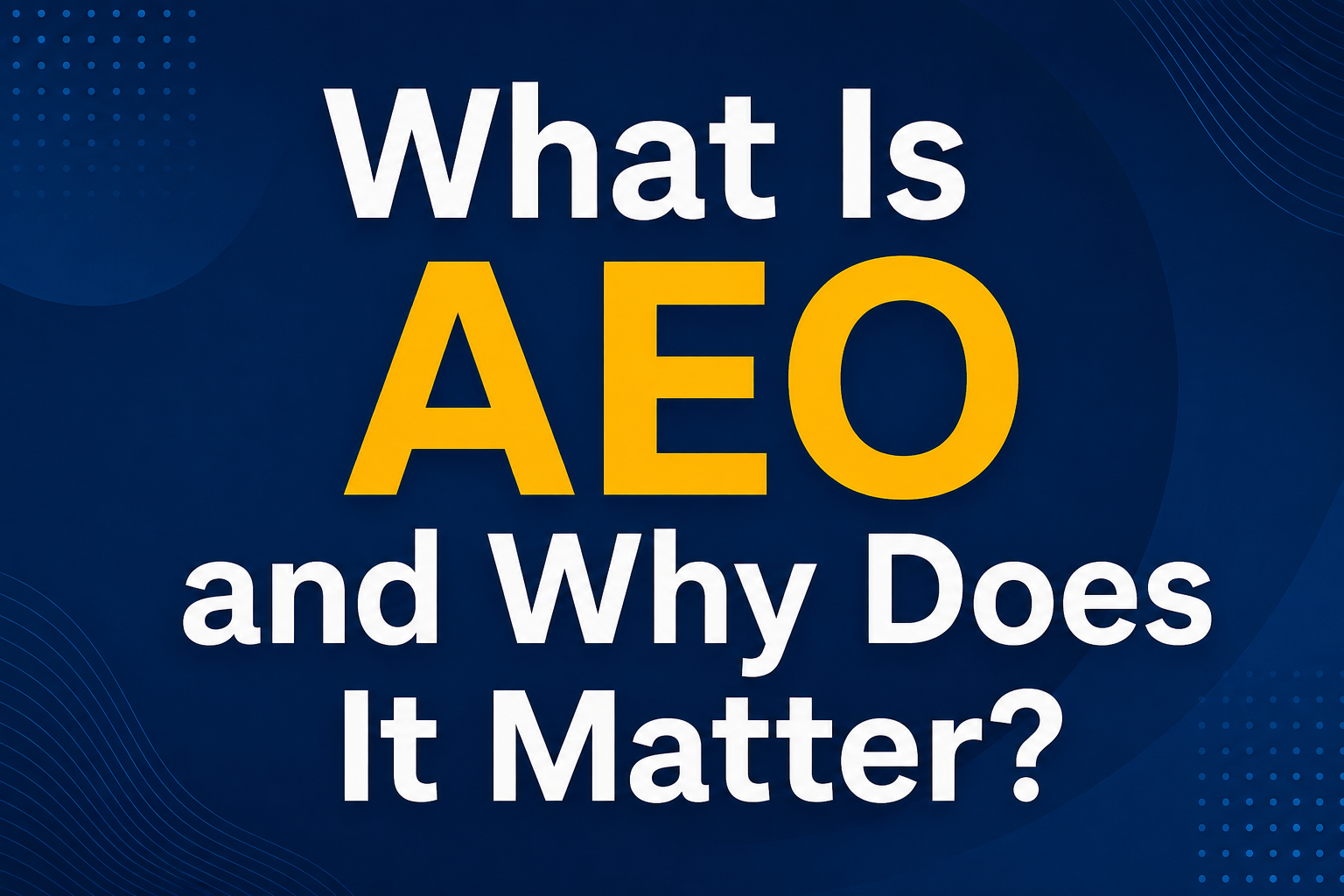
AEO, or Answer Engine Optimization, is the practice of structuring and optimizing content so that it can be easily understood, extracted, and presented by AI-powered answer engines. Unlike traditional search engines that return a list of links, answer engines aim to give the user a single, direct response, often synthesized from multiple sources. AEO focuses on making your content the source that these engines choose to pull from.
This includes optimizing for platforms such as Google's AI Overviews, Bing Chat, ChatGPT search, Perplexity, and voice assistants. The goal is not just to rank on a search results page, but to be quoted, cited, or featured directly inside an AI-generated answer.
AEO vs. SEO: What's the Difference?
Traditional SEO is built around ranking web pages higher in search engine results pages so users click through to a website. It relies heavily on keywords, backlinks, page authority, and technical factors like site speed and mobile-friendliness.
AEO shares some overlap with SEO but shifts the end goal. Instead of optimizing purely for clicks, AEO optimizes for being selected, summarized, or cited by an AI system. This means content needs to be exceptionally clear, well-structured, and directly answer specific questions, since AI models scan for concise, authoritative snippets rather than entire pages of prose. In short, SEO gets you found; AEO gets you quoted.
Why AEO Matters Now
The way people search is fundamentally changing, and several trends make AEO impossible to ignore.
1. AI Overviews Are Reducing Clicks
When Google or another engine answers a query directly at the top of the page, fewer users click through to the original website. Brands that fail to appear inside these AI-generated summaries risk losing visibility entirely, even if they still rank well in traditional listings below.
2. Conversational Search Is Growing
Tools like ChatGPT, Claude, and Gemini are becoming everyday research assistants. People ask them nuanced, conversational questions and expect complete answers, not a list of links to sift through. Content that is written to directly answer these kinds of questions has a much higher chance of being surfaced.
3. Trust and Authority Are Amplified
When an AI engine cites your brand as a source, it lends your business instant credibility in front of the user. Being the cited answer builds trust in a way that a mere search ranking cannot replicate.
4. Early Movers Gain a Long-Term Advantage
AEO is still an emerging field, which means the competition for optimized content is lower now than it will be in a few years. Businesses that adapt early are more likely to become the default sources that AI models reference and continue citing over time.
How to Optimize for Answer Engines
1. Answer Questions Directly: Structure content around clear, specific questions and give concise, factual answers within the first few sentences, before expanding with detail.
2. Use Structured Data: Implement schema markup such as FAQ, HowTo, and Article schema, which makes it easier for AI crawlers to parse and understand your content.
3. Write in Natural, Conversational Language: Since answer engines are built to respond to spoken and conversational queries, content that mirrors natural speech patterns is more likely to be selected.
4. Build Topical Authority: Publish comprehensive, well-organized content clusters around your core subject matter so AI models recognize your site as a trusted, in-depth resource.
5. Keep Facts Accurate and Up to Date: AI systems favor sources with verifiable, current information, so regularly updating statistics, dates, and examples improves citation odds.
Final Thoughts
AEO is not a replacement for SEO, but an evolution of it. As AI-driven answer engines become the primary way people find information, brands that adapt their content strategy to be clear, structured, and answer-focused will maintain visibility while others fade into the background. Investing in AEO today means positioning your brand to be the trusted voice that AI systems choose to speak for tomorrow.