
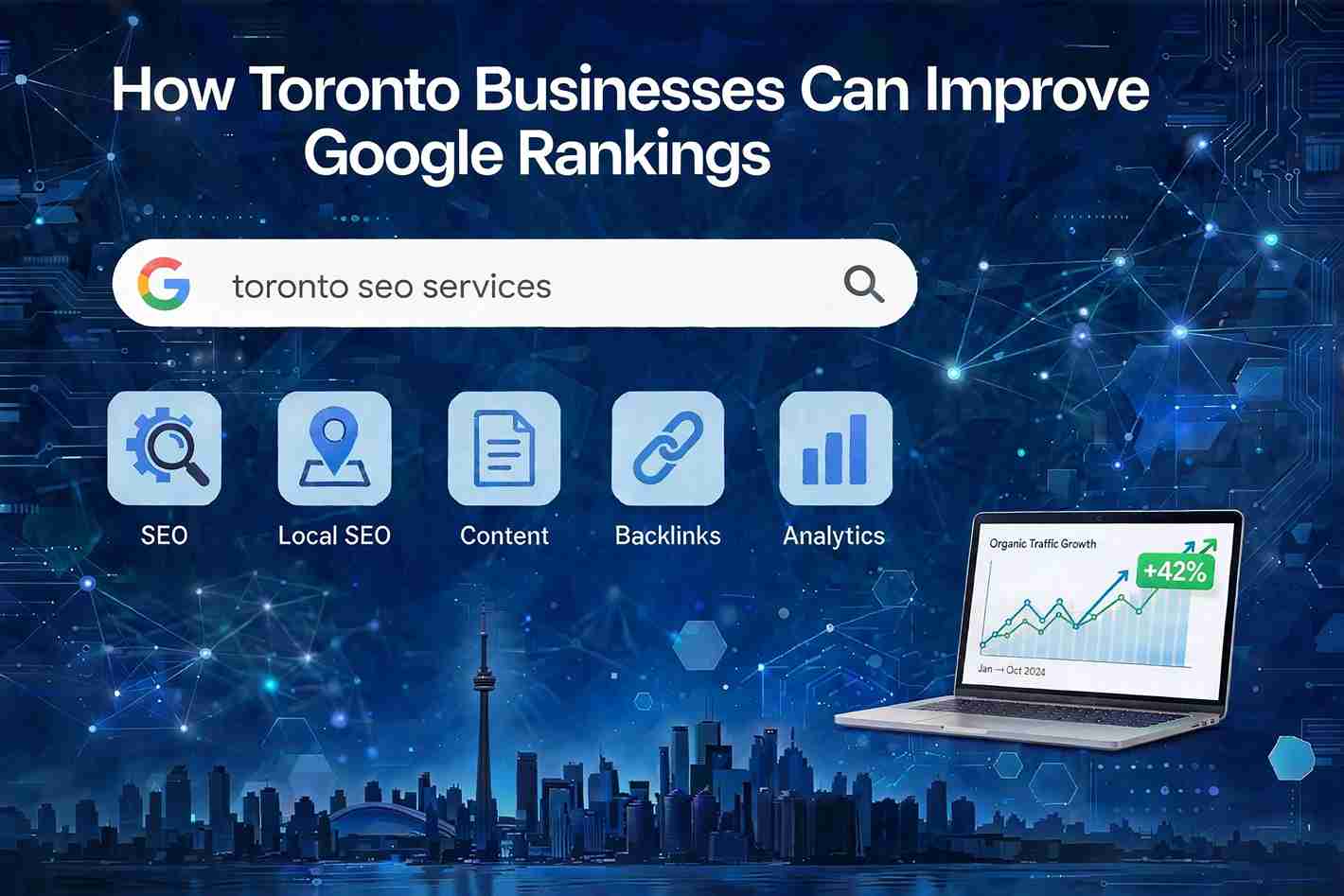
Toronto is one of the most competitive
business markets in Canada. Whether you run a restaurant in Kensington Market,
a law firm on Bay Street or a home-services company in Scarborough, your
customers are searching on Google before they buy. If your business does not
appear near the top, a competitor will take that customer instead.
The good news is that you do not need a huge
budget to rank well. You need a clear strategy and consistent effort. Here are
seven practical ways Toronto businesses can improve their Google rankings.
1. Optimize Your Google Business
Profile
For local searches such as "dentist near
me" or "plumber in Toronto," your Google Business Profile (GBP)
is often the most important asset you have. It controls whether you show up in
the Map Pack, the three listings displayed above regular results.
•
Claim and
verify your listing so you
control the information shown.
•
Choose
accurate categories and add
secondary categories that describe your services.
•
Keep your NAP
consistent. Your business
name, address and phone number must match everywhere online.
•
Add real
photos, service lists, opening
hours and regular posts about offers or news.
2. Target Toronto-Specific
Keywords
Generic keywords are expensive and hard to
win. Local keywords bring buyers who are ready to act. Instead of targeting
"accounting services," aim for phrases like "small business
accountant in North York" or "bookkeeping services downtown
Toronto."
Include neighbourhoods and areas you serve,
such as Etobicoke, Yorkville, Liberty Village, Mississauga or the wider GTA.
Use these naturally in page titles, headings, URLs and body text. Tools like
Google Keyword Planner and Google Search Console show what people in your area
actually type.
3. Create Location-Focused Pages
and Content
Google rewards websites that clearly show
relevance to a place. If you serve several areas, build a dedicated page for
each one with unique content, local details, testimonials and a clear call to
action. Avoid copying the same text and swapping the city name, since that
offers little value and can hurt your rankings.
A regular blog also helps. Write about topics
your customers care about, such as "How to prepare your home for a Toronto
winter" or "Permits needed to renovate in Ontario." Helpful,
locally relevant content builds trust and earns links.
4. Earn and Respond to Customer
Reviews
Reviews influence both rankings and
conversions. Google looks at the number, quality and recency of reviews, and
shoppers read them before choosing a business.
Ask satisfied customers for a review right
after a job is completed, and make it easy by sharing your direct review link.
Reply to every review, positive or negative, in a professional and helpful
tone. Never buy fake reviews, as this violates Google policy and can get your
listing suspended.
5. Build Local Citations and
Quality Backlinks
Citations are mentions of your business
details on other websites. List your business on trusted directories such as
Yelp Canada, Yellow Pages Canada, the Toronto Region Board of Trade and
relevant industry directories. Accuracy matters more than quantity.
Backlinks from respected local websites send
strong trust signals. You can earn them by sponsoring a community event,
partnering with local charities, contributing to Toronto news or blogs, or
collaborating with nearby complementary businesses.
6. Make Your Website Fast and
Mobile-Friendly
Many Toronto searches happen on phones, often
while people are commuting or already out and looking for a service. Google
uses mobile-first indexing, so a slow or hard-to-use mobile site will hold you
back.
•
Compress
images and use modern formats.
•
Use reliable
hosting and enable caching.
•
Use a
responsive design with clear
buttons and a click-to-call option.
•
Secure your
site with HTTPS and fix broken
links.
Check your Core Web Vitals in Google Search
Console and PageSpeed Insights to find specific issues.
7. Use Structured Data and Track
Your Results
Schema markup helps Google understand your
business, including your address, hours, services and reviews. Adding
Local Business schema can improve how your listing appears in search results.
SEO is not a one-time job. Set up Google
Analytics and Google Search Console, then review which keywords, pages and
locations bring traffic and enquiries. Adjust your approach every month based
on what the data shows.
Common Mistakes to Avoid
•
Inconsistent
business information across
directories and social profiles.
•
Keyword
stuffing instead of writing
naturally for readers.
•
Ignoring
mobile users and slow page
speed.
•
Expecting
instant results. Local SEO
usually takes three to six months to show strong progress.
Final Thoughts
Improving your Google rankings in Toronto
comes down to being visible, relevant and trustworthy. Start with your Google
Business Profile, target local keywords, collect genuine reviews and keep your
website fast and useful. Stay consistent, and you will steadily climb above
competitors who treat SEO as an afterthought.
If you need expert help, a local SEO
specialist can audit your current setup and build a plan tailored to your
industry and neighbourhood. Start with one improvement today, and build from
there.