
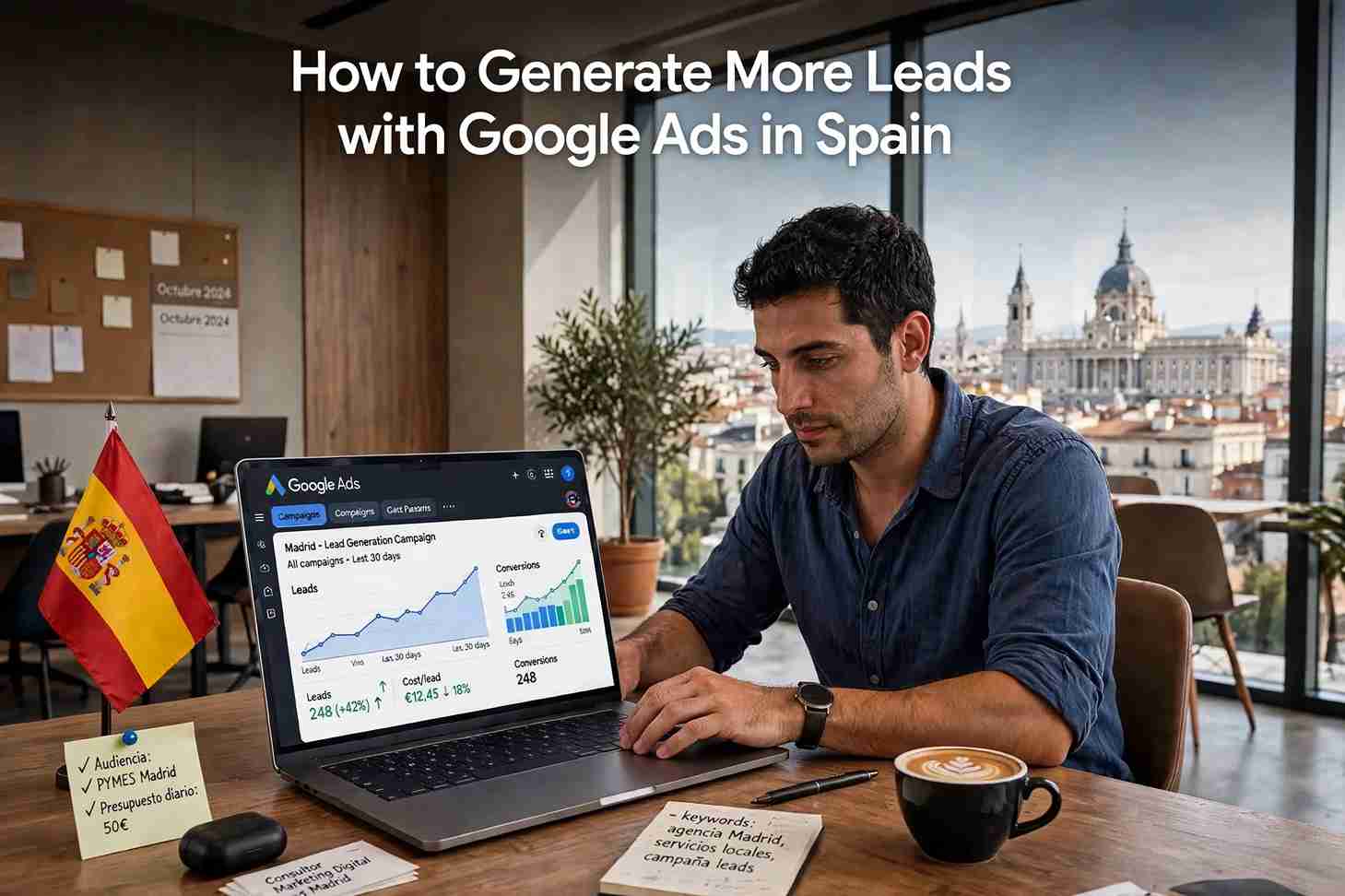
Spain is a
rewarding market for online advertisers. Millions of people search in Spanish
every day, mobile use is high, and businesses from Madrid to Valencia are
competing for the same customers. Google Ads can put your company in front of
buyers at the moment they are ready to enquire, but only if the campaign is
built with the Spanish audience in mind.
This guide
walks through practical steps to win more leads in Spain while keeping your
cost per lead under control.
Understand How Spanish Users Search
Language is the
first place campaigns go wrong. Spanish is not one-size-fits-all, and a direct
translation of English keywords rarely matches what people actually type.
Someone looking for a lawyer might search “abogado”, “despacho de abogados
cerca de mí” or “abogado barato en Sevilla”, and each phrase signals a
different intent.
Spend time with
Google’s Keyword Planner and the search terms report to learn the real phrases
your audience uses. Look at regional differences too. Catalonia, Andalucía and
the Basque Country each have their own habits, and in some areas Catalan or
Basque queries are worth testing alongside Castilian Spanish.
Build a Focused Account Structure
A tidy account
is easier to optimise and gives Google cleaner signals. Group keywords by
service or product, and write ads that speak directly to that group. Instead of
one broad campaign called “Services”, create separate campaigns for each offer,
and consider splitting by region when your pricing, availability or competition
differs.
•
Use exact and phrase match first. They keep
traffic relevant while you gather data.
•
Add negative keywords early. Terms like
“gratis”, “empleo” or “tutorial” can drain budget on people who will never
become leads.
•
Separate brand and non-brand terms. This shows
you what is truly bringing new customers.
Write Ads That Sound Local
Your ad is a
first impression, so it should read as natural Spanish written for Spain, not
Latin America. Small word choices matter. Use “ordenador” rather than
“computadora”, and “móvil” rather than “celuar”. Spanish users also respond to
clear value and trust cues.
•
Lead with the benefit. Say what the customer
gains, such as a free quote, a quick call-back or a same-week appointment.
•
Show price clarity. If you can mention “desde 99
€” or “presupuesto sin compromiso”, do it.
•
Use every extension. Call, location, sitelink
and lead form assets take up more space and give people more ways to respond.
Design Landing Pages That Convert
Clicks only
become leads when the page after the click earns trust. Many Spanish users
browse on their phones, so a slow or cluttered page loses people quickly. Keep
the message consistent with the ad, put one clear call to action above the fold
and keep forms short. Name, phone and email are often enough for a first
contact.
Trust signals
help a great deal. Add customer reviews, recognisable client logos,
certifications and a visible phone number. Many Spanish buyers like to talk
before they commit, so a click-to-call button and WhatsApp option can
noticeably raise your enquiry rate. Make sure the page also shows a clear
privacy notice and consent wording.
Use Smart Bidding and Audience Signals
Once you have
enough conversion data, Google’s automated bidding strategies such as Maximise
Conversions or Target CPA can find likely leads more efficiently than manual
bids. Give them a good foundation: accurate conversion tracking, enough daily
budget and a few weeks to learn before you judge them.
Layer in
audiences to guide the system. Customer lists, website visitors and in-market
segments help Google understand who tends to convert. Remarketing is especially
useful for services with a longer decision cycle, because it keeps your brand
visible after someone leaves without enquiring.
Track Leads Properly and Respect Privacy
You cannot
improve what you do not measure. Set up conversion tracking for form
submissions, phone calls and WhatsApp clicks, and import offline outcomes from
your CRM so Google learns which leads become paying customers. This matters
more than raw lead volume, because cheap leads that never buy are a hidden
cost.
Remember that
Spain follows GDPR and the local LOPDGDD law. Use a compliant consent banner
and consent mode so your measurement stays accurate while respecting user
choices.
Time Your Campaigns for Spanish Habits
Spanish daily
rhythms differ from many other countries. Lunch is later, evenings run long and
August is often quiet for business services. Check your hourly and day-of-week
reports, then adjust bids around the times your leads actually arrive. Seasonal
peaks, such as the return to work in September and the run-up to Christmas, are
good moments to increase budget.
A Simple Action Plan
1.
Research Spanish keywords with real local
phrasing and regional variants.
2.
Structure campaigns by service and region with
clean negative keyword lists.
3.
Write native-sounding ads with clear offers and
all available extensions.
4.
Improve landing pages for speed, trust and a
short, mobile-friendly form.
5.
Set up full tracking and connect CRM data before
scaling bids.
6.
Review weekly and shift budget to the campaigns
with the lowest cost per qualified lead.
Final Thoughts
Generating more
leads with Google Ads in Spain comes down to relevance. When your keywords
reflect how Spaniards really search, your ads sound local and your landing
pages make it easy to get in touch, the results follow. Start small, measure
carefully and keep refining. With steady optimisation, Google Ads can become
one of your most dependable sources of new business in Spain.