Publishing content without a plan is like driving without a map. You may move, but you rarely arrive anywhere useful. Many businesses post blogs, videos, and social updates every week, yet see little traffic, few leads, and no clear return. The difference between those businesses and the ones that grow through content is simple: a documented, goal-driven content marketing strategy.
This guide walks you through the exact steps to build one, whether you run a startup, a local service business, or a growing company.
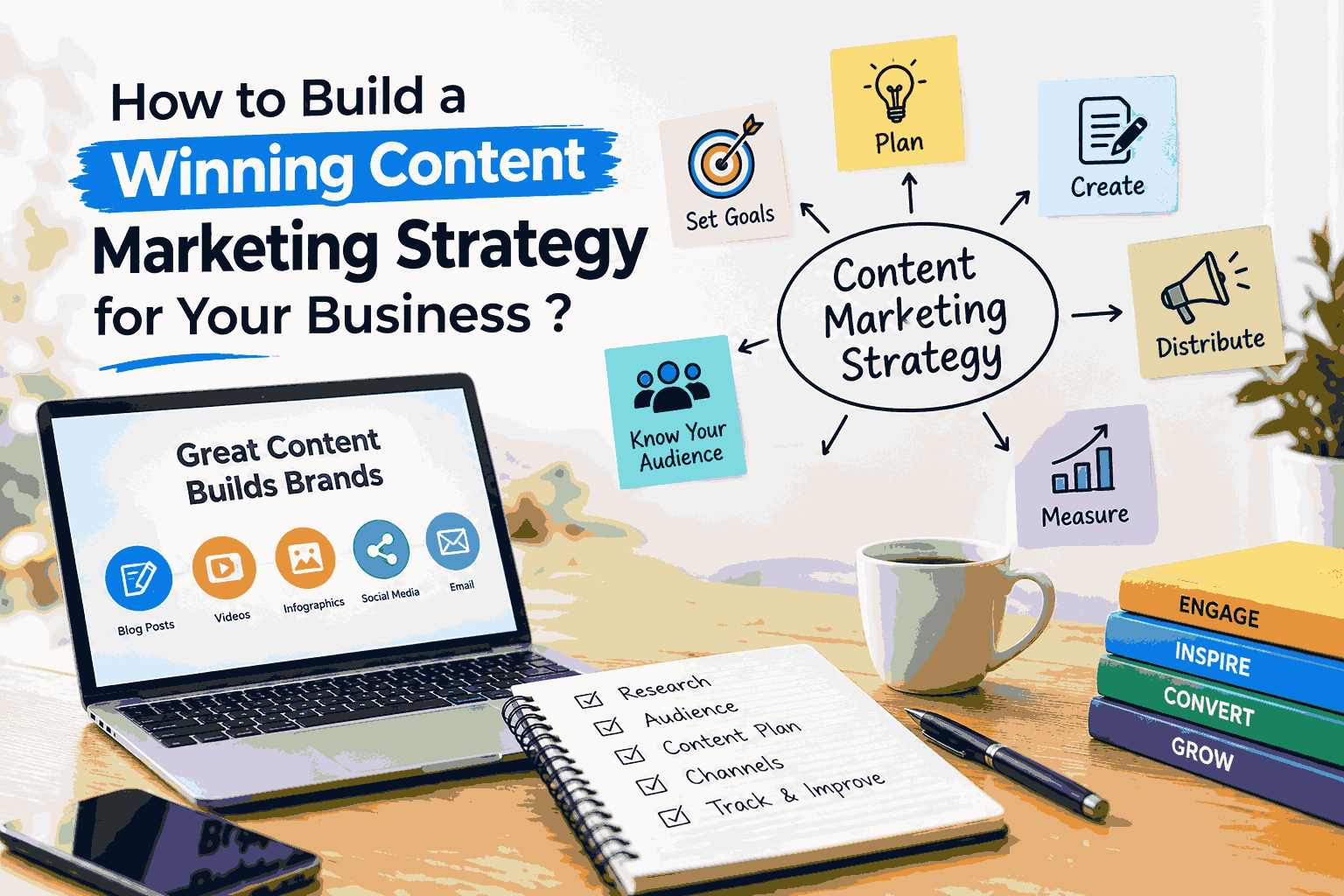
1. Start With Clear, Measurable Goals
Every strong strategy begins with a purpose. Ask yourself what content should actually do for your business. Common goals include increasing website traffic, generating qualified leads, building brand awareness, nurturing existing customers, or supporting sales.
Make each goal measurable. Instead of "get more traffic," aim for "grow organic traffic by 40% in six months" or "collect 150 newsletter sign-ups per month." Specific targets make it easy to judge what is working and what is not.
2. Know Your Audience Inside Out
Content works when it solves a real problem for a real person. Build simple buyer personas that capture who your customers are, what challenges they face, what questions they ask before buying, and where they spend time online.
Go beyond guesswork. Talk to your sales and support teams, send short surveys, read customer reviews, and browse the communities your audience uses. The exact words customers use to describe their problems are often your best headline ideas.
3. Audit What You Already Have
Before creating anything new, review your existing content. Identify which pieces bring traffic, which generate leads, and which are outdated or underperforming. Often you can refresh an older article, merge similar posts, or repurpose a popular blog into a video or infographic. This saves time and strengthens what already works.
4. Research Topics and Keywords
Great content meets demand that already exists. Use tools such as Google Search Console, Google Trends, Ahrefs, or Semrush to find the topics and keywords your audience searches for. Focus on three things:
- Search intent: Understand whether people want to learn, compare, or buy, and match your content to that need.
- Competition: Look for topics where you can realistically rank or offer a better angle.
- Business relevance: Choose topics that connect naturally to your products or services.
Organize your ideas into topic clusters: one broad pillar page supported by several detailed articles that link to each other. This structure builds authority and helps search engines understand your expertise.
5. Choose the Right Formats and Channels
You do not need to be everywhere. Pick the formats and platforms where your audience is most active and where your team can deliver consistently. Blog posts and guides support SEO, email newsletters nurture relationships, short videos boost reach, and case studies build trust with buyers.
A smaller number of channels done well beats a scattered presence across many. Start with two or three, then expand once your process is running smoothly.
6. Build an Editorial Calendar
Consistency is a major ranking and trust factor, and a calendar makes consistency possible. Plan your topics, formats, owners, deadlines, and publishing dates in a simple spreadsheet or a tool like Trello, Notion, or Asana.
Balance your mix. Include educational content for people at the top of the funnel, comparison and how-to content for those considering options, and proof-based content such as testimonials and case studies for people ready to decide. Leave room for timely topics, too.
7. Create High-Quality, Helpful Content
Quality is what separates content that ranks and converts from content that gets ignored. Aim to be genuinely useful: answer the question completely, use clear language, add real examples, and include original insights or data where possible.
Write strong headlines, keep paragraphs short, use descriptive subheadings, and add visuals that clarify your points. Every piece should also include a clear next step, such as downloading a guide, booking a call, or reading a related article.
8. Distribute and Promote Strategically
Hitting publish is only half the job. Share each piece through your email list, social profiles, and relevant communities. Repurpose one long article into several short posts, a carousel, or a video script. Consider partnering with industry experts, guest posting, or using paid promotion to amplify your best-performing content.
A useful rule of thumb is to spend as much effort promoting content as you do creating it.
9. Measure, Learn, and Optimize
Track the metrics that connect to your original goals. These typically include organic traffic, keyword rankings, engagement time, conversion rate, leads generated, and revenue influenced by content.
Review results monthly and run a deeper analysis each quarter. Double down on formats and topics that perform, update content that is slipping, and retire ideas that do not deliver. A strategy is a living document, not a one-time project.
Common Mistakes to Avoid
- Publishing without a goal: Content with no purpose rarely produces results.
- Writing for search engines only: Prioritize people first; rankings follow quality.
- Ignoring distribution: Even great content needs a promotion plan.
- Being inconsistent: Sporadic posting weakens momentum and audience trust.
- Never updating old content: Fresh, accurate pages perform better over time.
Final Thoughts
A winning content marketing strategy is not about producing more content. It is about producing the right content for the right people at the right time, then measuring and improving it continuously. Set clear goals, understand your audience, plan with a calendar, create genuinely helpful material, promote it well, and let data guide your next move.
Start small, stay consistent, and refine as you learn. Within a few months, your content can become one of your most reliable and cost-effective sources of growth.