Introduction
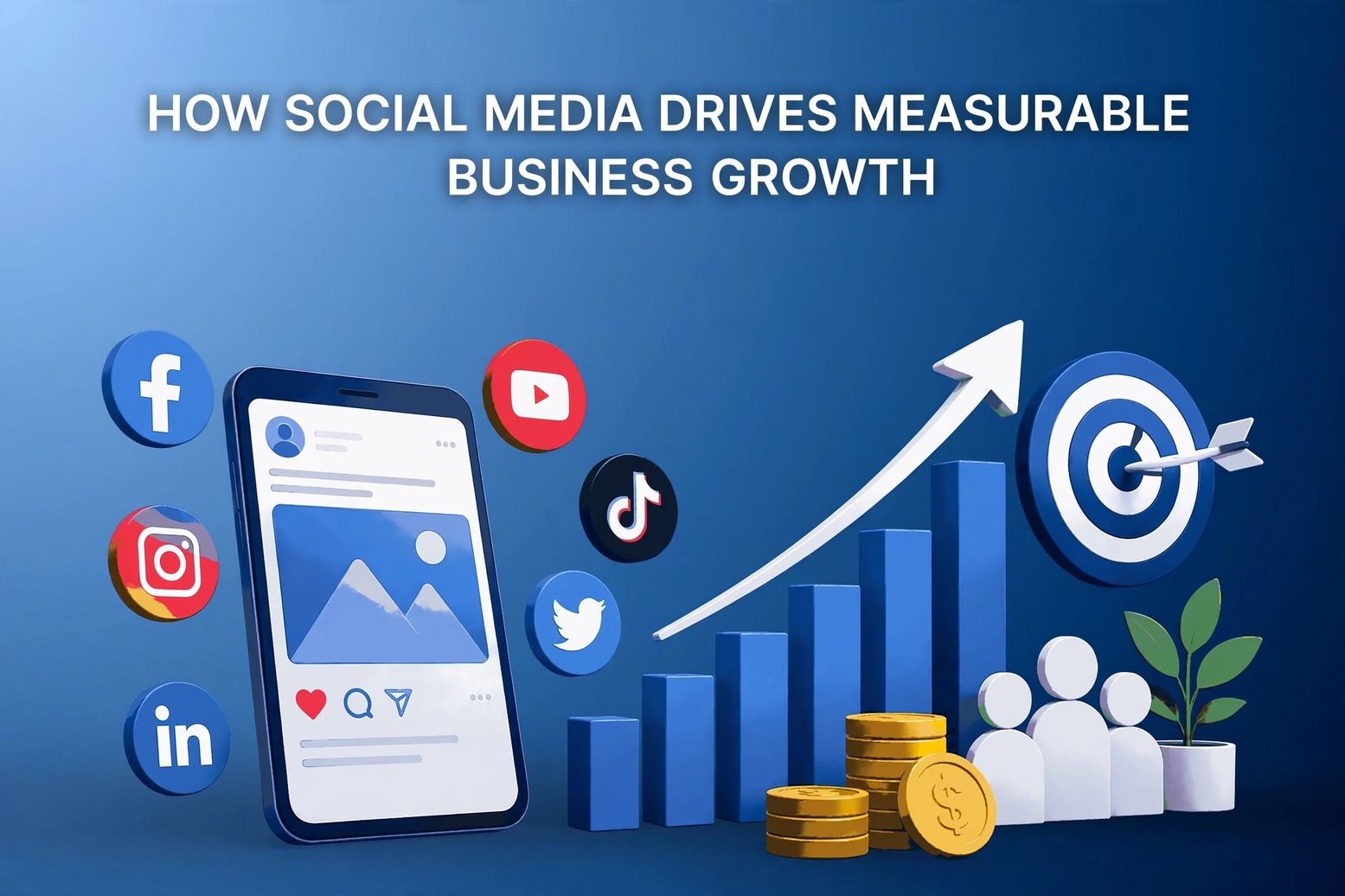
Social media has moved far beyond being a place to share photos and connect with friends. Today, it is one of the most powerful engines for business growth, giving companies of every size the ability to reach new customers, build lasting relationships, and drive measurable revenue. Whether you run a small local shop or a global enterprise, platforms like Instagram, LinkedIn, Facebook, TikTok, and X (formerly Twitter) offer direct access to millions of potential customers at a fraction of the cost of traditional advertising. In this article, we explore exactly how social media drives business growth and what strategies you can use to make it work for your brand.
1. Building Brand Awareness at Scale
One of the most immediate benefits of social media is the ability to put your brand in front of a large, targeted audience quickly. Every post, story, reel, or video is an opportunity for potential customers to discover who you are and what you offer. Consistent posting, recognizable visuals, and a clear brand voice help your business stay top of mind. Unlike traditional media, social platforms allow you to reach very specific demographics based on interests, location, age, and behavior, which means your awareness efforts are far more efficient and cost-effective.
2. Driving Website Traffic and Lead Generation
Social media acts as a bridge between your audience and your website or landing pages. By sharing valuable content, promotions, and clear calls-to-action, businesses can direct followers straight to product pages, blog posts, or sign-up forms. Features such as shoppable posts, link stickers, and lead generation ads make it easier than ever to convert casual scrollers into qualified leads. Over time, this steady stream of traffic compounds, giving your business a reliable, low-cost channel for generating new prospects.
3. Strengthening Customer Engagement and Loyalty
Unlike older forms of marketing, social media allows for two-way conversations. Businesses can respond to comments, answer questions in direct messages, and participate in trending conversations relevant to their industry. This level of engagement builds trust and humanizes the brand, making customers feel heard and valued. Loyal customers who engage regularly are also more likely to become brand advocates, sharing their positive experiences with their own networks and extending your reach organically.
4. Leveraging Social Proof and User-Generated Content
People trust recommendations from other people far more than they trust advertisements. When customers post reviews, testimonials, unboxing videos, or tag your brand in their own content, it acts as authentic social proof that influences buying decisions. Encouraging user-generated content through hashtags, giveaways, or simple appreciation posts can significantly boost credibility and attract new customers who see real people enjoying your product or service.
5. Enabling Precise, Data-Driven Advertising
Paid social advertising has become one of the most measurable forms of marketing available. Platforms provide detailed analytics on impressions, clicks, conversions, and return on ad spend, allowing businesses to test, optimize, and scale campaigns with confidence. Advanced targeting options, including lookalike audiences and retargeting, ensure that ad budgets are spent reaching people most likely to convert, which directly improves marketing efficiency and overall growth.
6. Supporting Product Launches and Sales
Social media has become a launchpad for new products and limited-time offers. Countdown stickers, teaser content, influencer partnerships, and live shopping events all create excitement before a product even hits the market. This kind of pre-launch buzz can generate demand and drive a surge in sales the moment a product becomes available, something traditional marketing channels struggle to replicate at the same speed.
7. Gaining Competitive and Market Insights
Beyond marketing, social media offers a real-time window into market trends and competitor strategies. Businesses can monitor conversations, track sentiment, and identify emerging customer needs by paying attention to what people are saying online. These insights help brands adapt quickly, refine their offerings, and stay ahead of shifting consumer expectations, which is essential for sustained growth in a competitive marketplace.
Practical Tips to Maximize Growth Through Social Media
• Post consistently and maintain a recognizable brand voice across platforms.
• Focus on the platforms where your target audience actually spends time.
• Use analytics to identify what content performs best and double down on it.
• Combine organic content with paid campaigns for faster, measurable results.
• Engage genuinely with your audience instead of only broadcasting promotions.
• Collaborate with influencers or creators who align with your brand values.
Conclusion
Social media is no longer optional for businesses that want to grow, it is a core pillar of modern marketing strategy. From building brand awareness and generating leads to strengthening customer loyalty and driving sales, the right social media approach can transform how a business connects with its audience. Companies that invest in consistent, authentic, and data-driven social media strategies position themselves to capture new opportunities and achieve sustainable growth in an increasingly digital marketplace.