
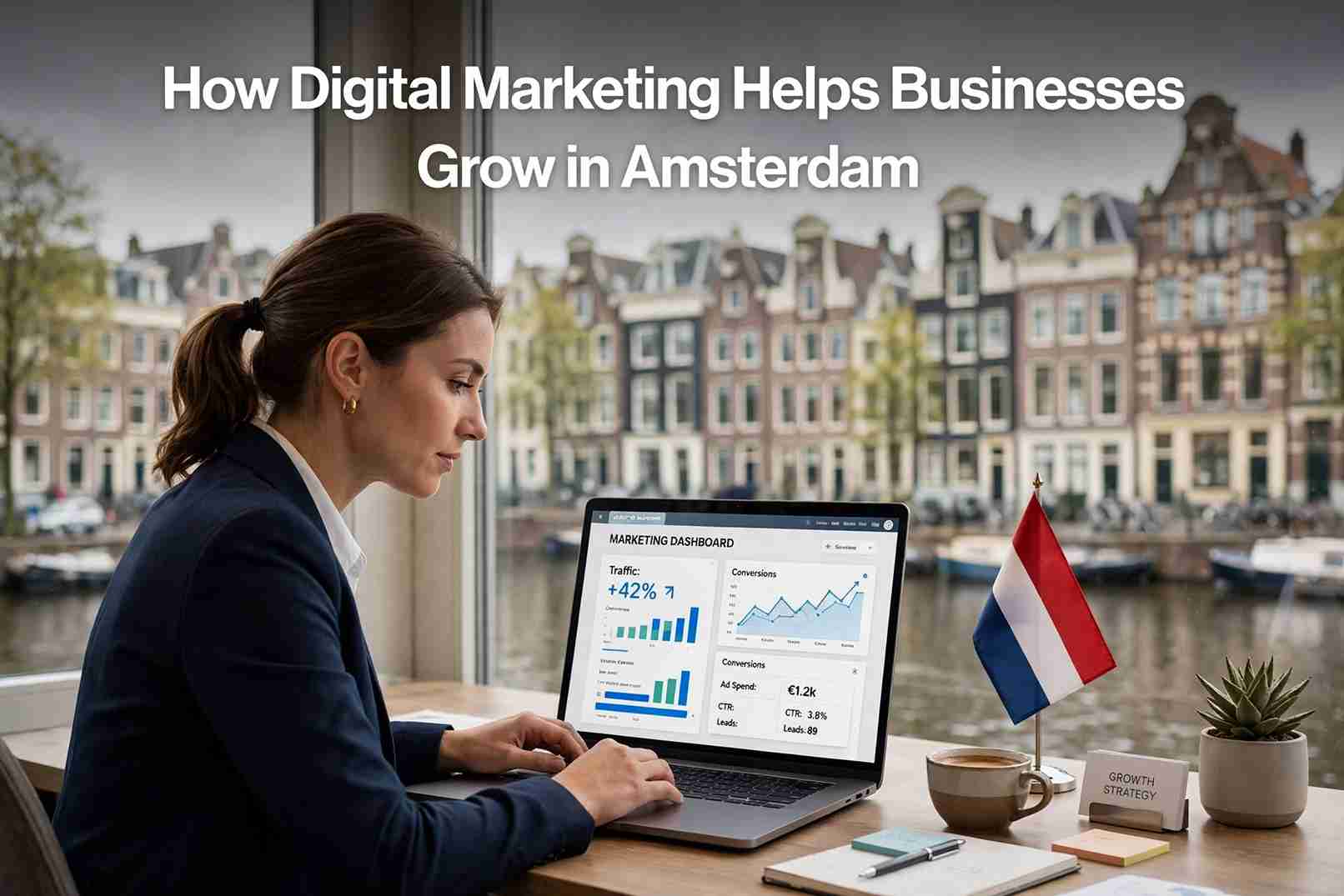
Amsterdam is a
city where tradition and innovation sit side by side. Canal-house boutiques
share streets with fast-moving startups, and a steady flow of international
visitors and expats keeps demand high. But a great location is no longer
enough. Today, customers meet a business on their phone long before they walk
through its door. That is exactly where digital marketing makes the difference.
Why Amsterdam Is Made for Digital Growth
The Netherlands
is one of the most connected countries in Europe. People here research, compare
and buy online as a matter of habit, whether they are booking a dinner table in
De Pijp or hiring an accountant in Zuidas. For local businesses, this means a strong
online presence is not a bonus. It is the first impression, and often the
deciding one.
Competition is
also intense. With so many restaurants, agencies, shops and service providers
packed into one city, digital marketing gives smaller businesses a way to stand
out without the budget of a large brand.
Local SEO: Be Found at the Right Moment
When someone
searches for “best bike repair near me” or “web designer Amsterdam,” they are
ready to act. Local search engine optimisation (SEO) puts your business in
front of these people at that exact moment.
A good local
SEO foundation includes:
•
A complete, regularly updated Google Business Profile
with photos, opening hours and services.
•
Website pages that mention your neighbourhood, such as
Jordaan, Oost or Noord, in a natural way.
•
Consistent name, address and phone details across every
directory.
•
Genuine customer reviews, answered promptly and
politely.
Unlike
advertising, the results of SEO build over time. A page that ranks well keeps
bringing visitors month after month.
Paid Advertising: Fast and Measurable
If you need
results quickly, pay-per-click (PPC) advertising on Google and social platforms
is a strong option. You can target people by location, language, interests and
even the time of day. A canal-tour operator, for example, can show ads to
tourists searching in English during the summer, while a coworking space can
target freelancers searching in Dutch.
The biggest
advantage is control. You decide the budget, see what each click costs, and
stop or adjust a campaign the moment it stops performing. That makes paid ads a
low-risk way to test new offers or enter a new audience segment.
Social Media: Building a Community in a Visual City
Amsterdam is
photogenic, creative and social, and its businesses thrive on platforms like
Instagram, TikTok and LinkedIn. Cafés share their latest bakes, designers show
behind-the-scenes work, and B2B firms build authority with thoughtful posts
about their industry.
The goal is not
just followers. It is conversation. Replying to comments, sharing customer
stories and partnering with local creators turns casual viewers into loyal
supporters who recommend you to friends.
Content and Email Marketing: From Interest to Loyalty
Helpful content
earns trust. A blog post answering a common question, a short guide to choosing
the right service, or a video showing how your product works all prove your
expertise before a customer ever contacts you.
Email marketing
then keeps the relationship going. A simple monthly newsletter with an offer,
an event update or a useful tip reminds customers you exist. Because
subscribers have chosen to hear from you, email often delivers some of the best
returns of any channel.
Speaking to a Multilingual Audience
Amsterdam is
one of the most international cities in Europe. Many residents prefer Dutch,
while expats, students and visitors search in English or other languages.
Businesses that offer their website, ads and customer support in both Dutch and
English open the door to a much wider market and show they understand their
customers.
Data That Helps You Grow Smarter
One of digital
marketing’s greatest strengths is that you can measure it. Tools like Google
Analytics show which pages attract visitors, which campaigns bring enquiries
and where people drop off. Instead of guessing, you can invest more in what
works and drop what does not. Over time, this steady improvement is what
separates growing businesses from stagnant ones.
How to Get Started
•
Set a clear goal, such as more bookings, more leads or
higher online sales.
•
Make sure your website is fast, mobile-friendly and
easy to use.
•
Claim and optimise your Google Business Profile.
•
Choose one or two channels that match your audience,
then expand.
•
Review your results monthly and adjust.
You do not need
to do everything at once. Consistency matters more than scale.
Final Thoughts
Digital
marketing gives Amsterdam businesses a practical way to reach the right people,
build trust and turn attention into revenue. Whether you run a small
neighbourhood shop or a growing tech company, a thoughtful online strategy
helps you compete in one of Europe’s most dynamic cities. Start small, stay
consistent and let the data guide your next step.