Building a WordPress site is easy. Building one that's fast, secure, and maintainable at scale is a different job entirely, and it depends heavily on the tools sitting behind your workflow. Whether you're developing custom themes, building plugins, or managing client sites, the right toolkit can be the difference between shipping in hours instead of days and catching bugs before they ever reach production.
Here's a practical rundown of the tools professional WordPress developers actually rely on in 2026, organized by where they fit into your workflow.
1. Local Development Environments
Never build directly on a live site. A local environment lets you code, test, and break things safely before anything goes near production.
- Local (by WP Engine): The most popular local WordPress environment, letting you spin up a new site in one click with built-in SSL, custom domains, and reusable site blueprints.
- WordPress Studio: A newer, lightweight local development app built specifically for WordPress, aimed at fast setup with minimal configuration.
- MAMP / XAMPP: Long-standing local server stacks that give you more manual control over PHP versions and server configuration, useful when you need to replicate a specific hosting environment.
2. Code Editors and IDEs
Your editor is where most of your day actually happens, so it's worth choosing deliberately.
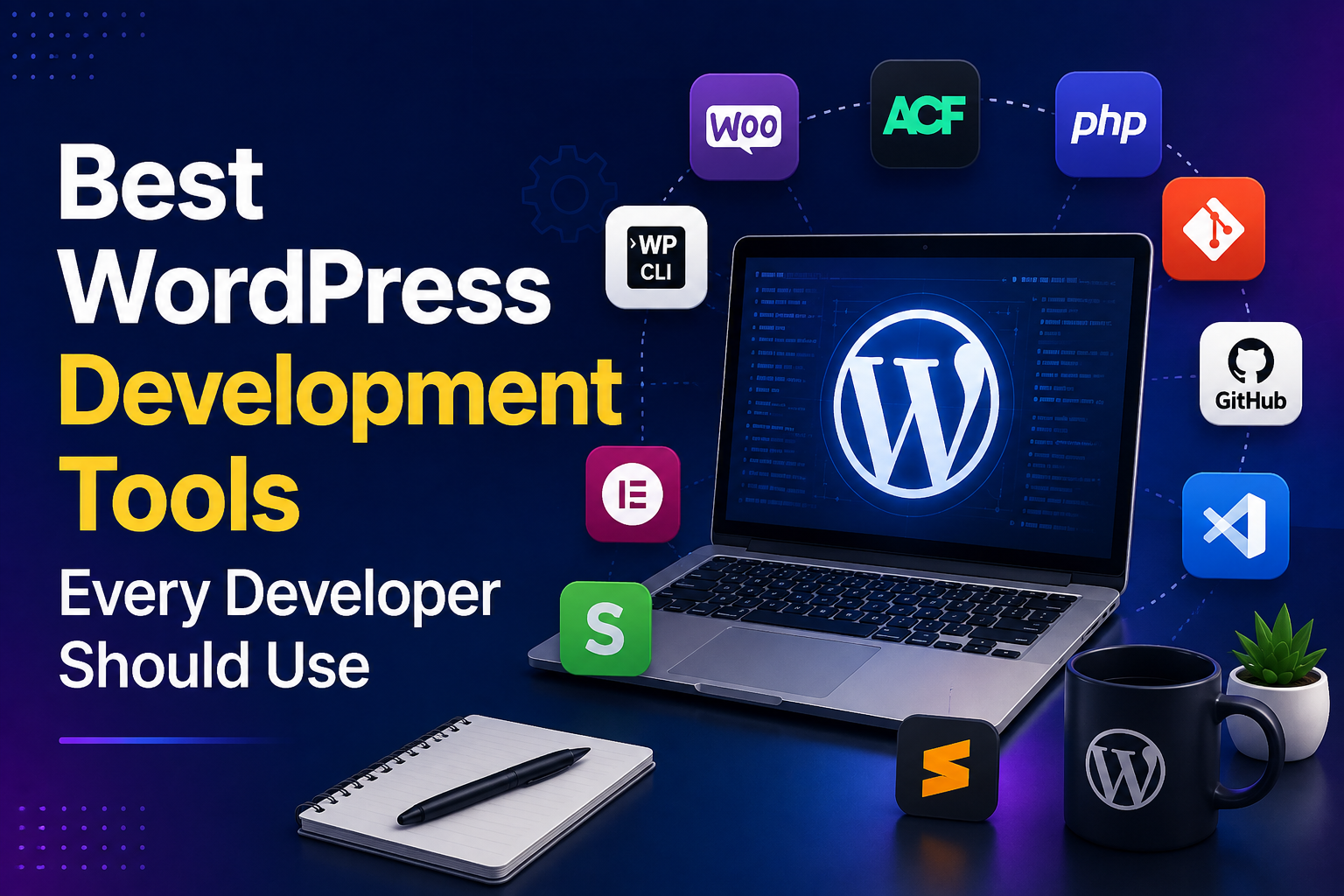
- Visual Studio Code: A free, lightweight editor with a massive extension ecosystem covering PHP intelligence, Git integration, linting, and live previews. It's the default choice for most WordPress developers.
- PhpStorm: A full-featured PHP IDE with WordPress-aware code completion, automatic refactoring for hooks and actions, and strong debugging tools. It's a paid product, but many plugin and theme developers consider it worth the subscription for large codebases.
3. Command-Line and Automation Tools
- WP-CLI: A command-line interface for WordPress that lets you install plugins, run updates, manage users, and back up databases without touching the browser. It's especially valuable when managing multiple sites or automating deployment scripts.
- Composer: The standard PHP dependency manager, used to pull in libraries and manage version control for custom plugin and theme development.
- Git: Non-negotiable for any serious build. Version control protects your codebase, enables collaboration, and makes rollbacks painless when something breaks.
4. API Testing and Debugging
- Postman: Used to test and debug requests against the WordPress REST API, which matters increasingly as more sites rely on headless setups, custom apps, and third-party integrations.
- Query Monitor: A developer plugin that shows database queries, hooks, PHP errors, and performance bottlenecks directly inside the WordPress admin, one of the fastest ways to diagnose a slow or broken site.
- Browser DevTools: Chrome and Firefox's built-in inspection tools remain essential for debugging front-end issues, checking network requests, and auditing performance.
5. Theme and Plugin Development Helpers
- Advanced Custom Fields (ACF): The go-to plugin for adding custom fields, flexible content blocks, and structured data to WordPress without writing repetitive admin panel code.
- GenerateWP: A code-snippet generator for custom post types, taxonomies, shortcodes, and widgets, useful for cutting down repetitive boilerplate during setup.
- Theme Check: A plugin that audits your theme against WordPress coding standards before you submit it to the repository or hand it off to a client.
6. Performance and Security
- WP Rocket: A caching and performance plugin that handles page caching, lazy loading, and file optimization, one of the fastest ways to improve load times without deep technical work.
- Query Monitor (again): Doubles as a performance tool, surfacing slow queries and excessive plugin overhead.
- Wordfence: A widely used security plugin offering a firewall, malware scanning, and login protection, particularly important for client sites handling sensitive data.
Building Your Own Stack
Not every developer needs every tool on this list. A freelancer building marketing sites might only need Local, VS Code, and WP Rocket. A developer maintaining a multisite network for an enterprise client will likely need WP-CLI, PhpStorm, and Query Monitor in daily rotation.
The pattern worth noticing is that the strongest WordPress workflows in 2026 combine four categories: a reliable local environment, a capable editor, command-line automation, and at least one debugging or performance tool running at all times. Skipping any one of these categories tends to show up later as slower development, harder-to-diagnose bugs, or performance issues that surface only after launch.
Final Thoughts
The right tools don't replace skill, but they do amplify it. A developer working with a well-matched stack can build faster, catch problems earlier, and hand off cleaner, more maintainable code. If there's a gap in your current setup, whether that's no local environment, no version control, or no performance monitoring, closing it is one of the highest-leverage improvements you can make to your workflow this year.