Social media marketing has matured far beyond vanity metrics like likes and follower counts. Brands today are under increasing pressure to prove that their social media investment actually contributes to business growth. This is where ROI, or return on investment, becomes essential. Without measuring ROI, businesses are essentially guessing whether their social media efforts are paying off, and in a competitive digital landscape, guessing is no longer good enough.
What ROI Really Means in Social Media Marketing
ROI in social media marketing refers to the measurable value a brand gets back compared to what it spends on content creation, advertising, tools, and management. This isn't limited to direct sales; it can include leads generated, website traffic, brand awareness, customer retention, and other outcomes that ultimately impact revenue. The key is connecting social media activity to tangible business results rather than treating engagement as the end goal.
Why ROI Matters More Than Ever
1. Budgets Are Under Greater Scrutiny
As marketing budgets face tighter oversight, businesses need clear justification for every dollar spent. Social media is often one of the largest line items in a marketing budget, and without ROI data, it becomes difficult to defend continued investment, especially when competing against channels with clearer, more direct attribution.
2. Vanity Metrics Don't Pay the Bills
Likes, shares, and follower growth can feel like progress, but they don't necessarily translate into revenue. A post can go viral and generate thousands of likes while producing zero actual customers. Focusing on ROI shifts attention away from surface-level engagement and toward metrics that reflect real business impact.
3. It Enables Smarter Strategic Decisions
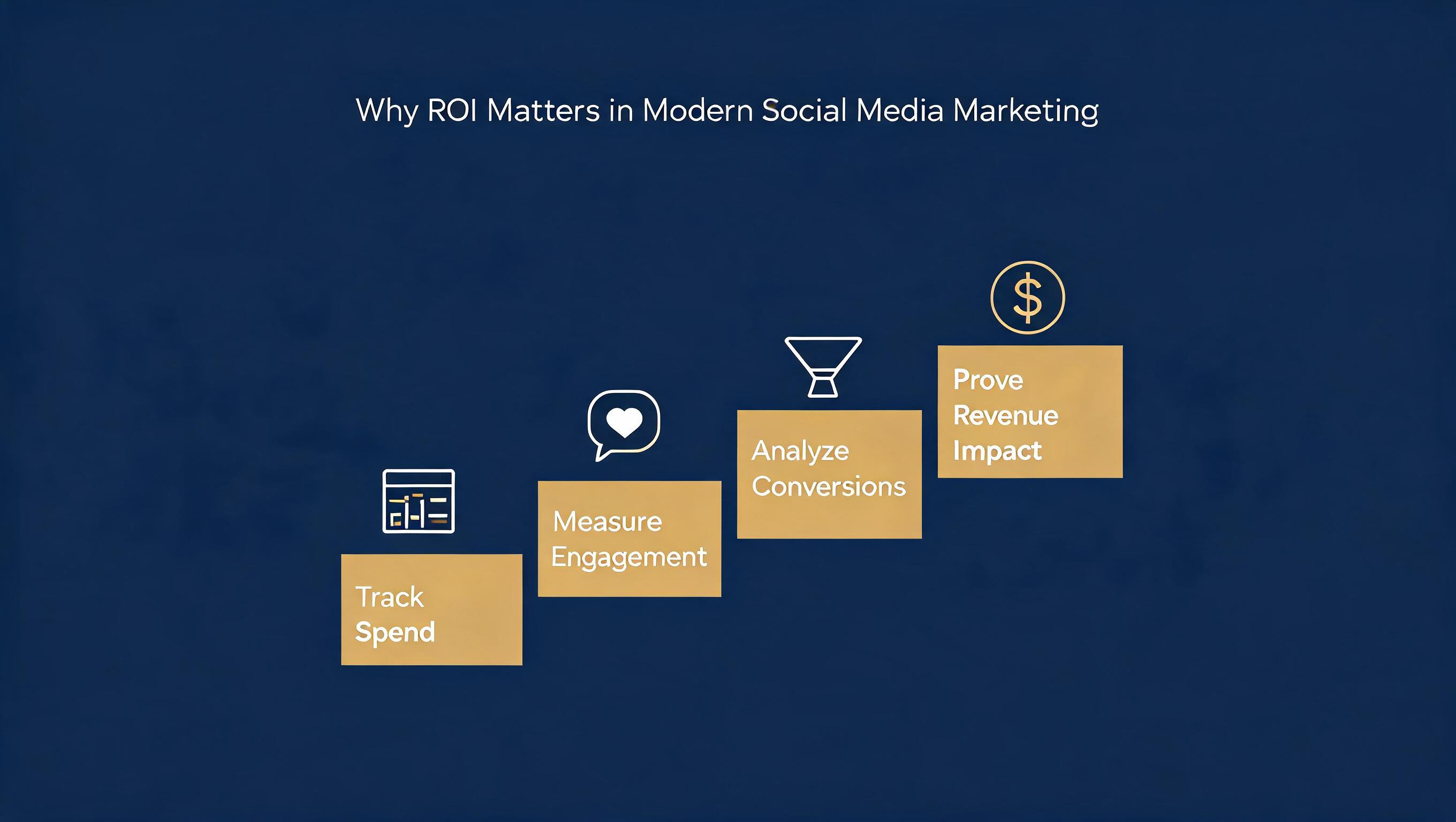
When you track ROI accurately, you gain insight into which platforms, content formats, and campaigns actually drive results. This allows you to reallocate budget toward high-performing channels and away from ones that look active but underdeliver, making your overall strategy more efficient over time.
4. It Builds Credibility with Stakeholders
Marketing teams that can present clear ROI data earn more trust and autonomy from leadership. Instead of having to defend social media spending with anecdotal success stories, teams backed by ROI figures can make a data-driven case for expanding budgets or trying new strategies.
5. It Helps Identify the Right KPIs for Your Business
ROI isn't one-size-fits-all. A B2B company might measure ROI through lead quality and sales-qualified conversions, while an e-commerce brand might focus on direct purchases and average order value. Understanding ROI forces businesses to define what success actually looks like for their specific goals, rather than relying on generic benchmarks.
How to Measure Social Media ROI Effectively
Step 1: Define Clear, Business-Aligned Goals
Before measuring ROI, identify what success looks like — whether that's lead generation, sales, website traffic, or customer support efficiency. Vague goals like "increase engagement" make ROI difficult to calculate.
Step 2: Track the Right Metrics
Depending on your goals, this could include conversion rate, cost per lead, customer acquisition cost, click-through rate, or revenue attributed to social campaigns. Choose metrics that tie directly back to business outcomes.
Step 3: Use Attribution Tools
UTM parameters, analytics platforms, and CRM integrations help connect social media activity to actual conversions, giving you a clearer picture of which campaigns are driving revenue rather than just traffic.
Step 4: Calculate ROI Using a Clear Formula
A simple approach is: (Revenue generated - Cost of investment) divided by Cost of investment, multiplied by 100 to get a percentage. This gives you a concrete number to evaluate performance and compare across campaigns.
Step 5: Review and Adjust Regularly
Social media platforms and audience behavior change constantly. Regularly reviewing ROI data allows you to adjust your strategy, double down on what works, and cut spending on tactics that aren't delivering results.
Common Mistakes That Undermine ROI Tracking
- Focusing only on vanity metrics instead of business outcomes.
- Not setting clear goals before launching campaigns.
- Failing to use tracking tools like UTM links or conversion pixels.
- Ignoring the long-term value of brand awareness and customer loyalty.
- Evaluating ROI too infrequently to make timely strategic adjustments.
Final Thoughts
In modern marketing, social media can no longer be treated as a purely creative or brand-awareness exercise disconnected from business performance. ROI matters because it turns social media from a cost center into a measurable growth driver. Brands that consistently track and optimize for ROI are better positioned to justify their spending, refine their strategy, and ultimately build social media programs that contribute meaningfully to long-term business success.