Why Social Media Is a Lead Generation Engine
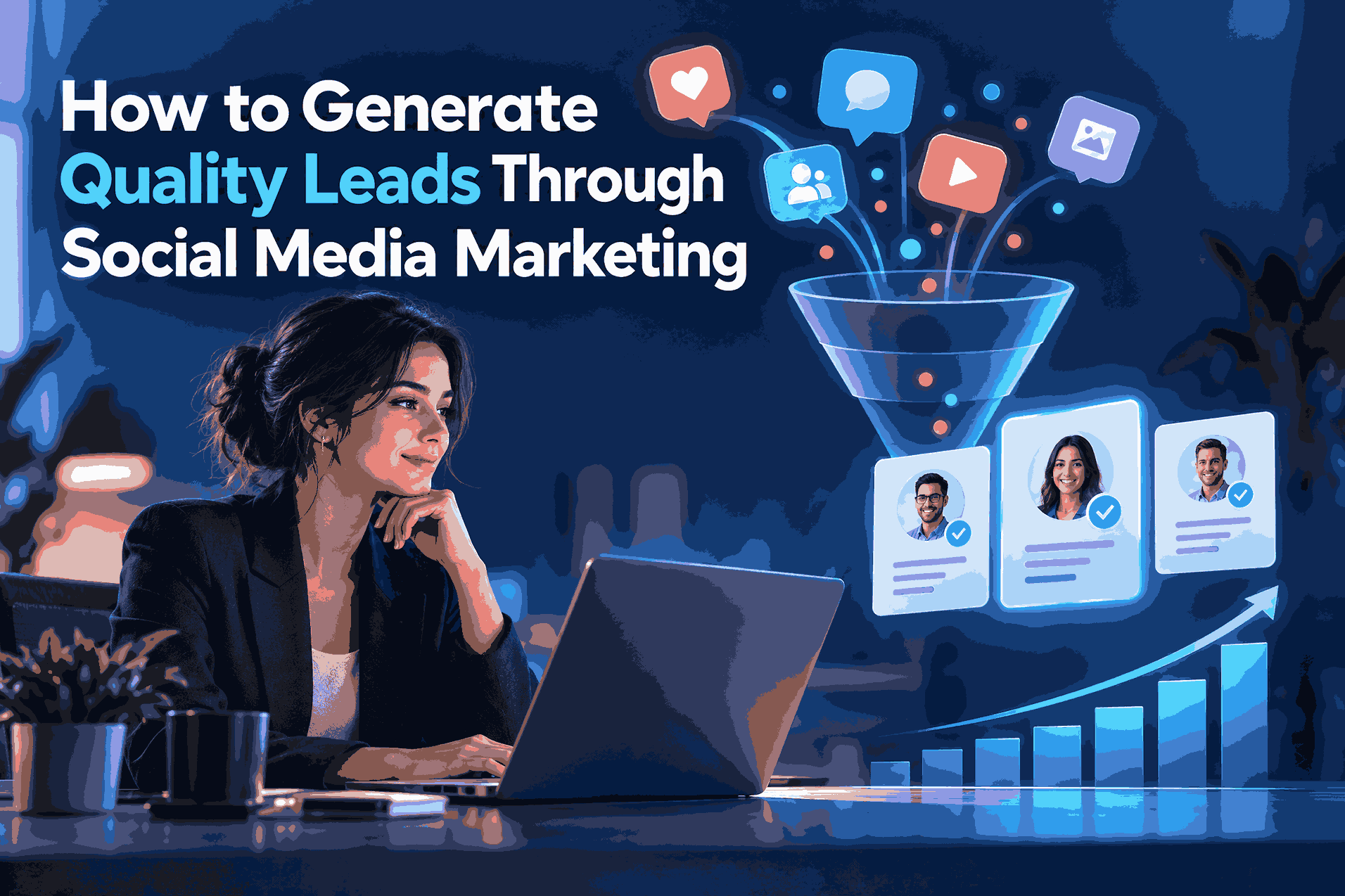
Social media lead generation means turning followers and viewers into people who share their contact details and show real interest in what you sell. Billions of people use social platforms every day, so your future customers are already there. The challenge is not reach. It is attracting the right people and moving them from a casual scroll to a real conversation.
Many businesses chase likes and follower counts, then wonder why sales stay flat. Quality leads are different. They match your ideal customer, have a real need, and are ready to hear from you. This guide walks through seven practical steps to attract them.
1. Define Your Ideal Customer
Quality leads start with clarity. Write down who your best customers are: their job role or life stage, their problems, their goals and the platforms they use. A buyer persona keeps every post, ad and message focused on people who can actually become customers, instead of a broad crowd that will never buy.
2. Choose the Right Platforms
You do not need to be everywhere. Pick two or three platforms where your audience already spends time.
- LinkedIn: best for B2B services, software and professional audiences.
- Instagram and Facebook: strong for consumer brands, local businesses and visual products.
- YouTube: ideal for education, demos and building long-term trust.
- X (Twitter): useful for news, quick insights and community conversations.
It is better to post well on two platforms than poorly on six.
3. Optimize Your Profiles for Conversion
Your profile is your landing page. Use a clear bio that says who you help and how. Add a professional photo or logo, a link to a dedicated landing page, and a button such as "Book a call" or "Download the guide." If a visitor cannot tell what to do next within five seconds, you will lose them.
4. Create Content That Attracts and Educates
People share their details with brands they trust. Build that trust with content that solves real problems.
- Share how-to posts, short videos and carousels that answer common questions.
- Post case studies and customer results as proof.
- Go live for Q&A sessions or webinars.
- Mix educational posts with a clear call to action, roughly four helpful posts for every promotional one.
Consistency matters more than perfection. A steady schedule helps the algorithm and your audience remember you.
5. Offer Lead Magnets Worth Giving an Email For
A lead magnet is a free resource offered in exchange for contact details. Good examples include checklists, templates, e-books, free audits, discount codes and webinar sign-ups. The best ones solve one specific problem quickly. Promote the offer in posts, stories, your bio link and pinned content, and send people to a simple landing page with a short form. Ask only for what you need, usually a name and an email address, because every extra field lowers conversions.
6. Use Paid Ads and Retargeting Wisely
Organic reach has limits, so paid social can speed up results. Lead generation ads on Facebook, Instagram and LinkedIn let people submit a form without leaving the app, which reduces friction. Target by interests, job titles, location and behavior, and run small tests before you scale. Retargeting is especially effective: show ads to people who visited your site or watched your videos but did not convert. They already know you, so they are warmer than cold audiences.
7. Engage, Qualify and Follow Up Fast
Leads go cold quickly. Reply to comments and direct messages promptly, and start real conversations instead of sending generic pitches. Ask a few simple questions to find out whether the person has a need, a budget and a timeline. Then follow up with a personal email or call, ideally within 24 hours. A short automated welcome sequence can nurture leads who are not ready to buy yet.
Track the Metrics That Matter
Measure what leads to revenue, not vanity numbers. Watch these:
- Cost per lead (CPL): how much you spend to earn each lead.
- Conversion rate: the share of visitors who become leads.
- Lead-to-customer rate: how many leads actually buy.
- Lead source: which platform and post type brings the best leads.
Use UTM links and your CRM to see where leads come from, then put more effort into what works and cut what does not.
Conclusion
Generating quality leads through social media marketing is a steady process, not a quick trick. Know your audience, show up on the right platforms, share useful content, offer a valuable lead magnet, and follow up fast. Then track your numbers and keep improving.
Start small this week: pick one platform, create one lead magnet and publish three helpful posts that point to it. Review the results after 30 days, and build from there.