For established businesses, organic search is rarely a side channel. It shapes brand visibility, lead quality, and long-term revenue. But corporate SEO is far more complex than optimizing a small website. It involves large site architectures, multiple stakeholders, strict compliance needs, and competition across hundreds of keywords.
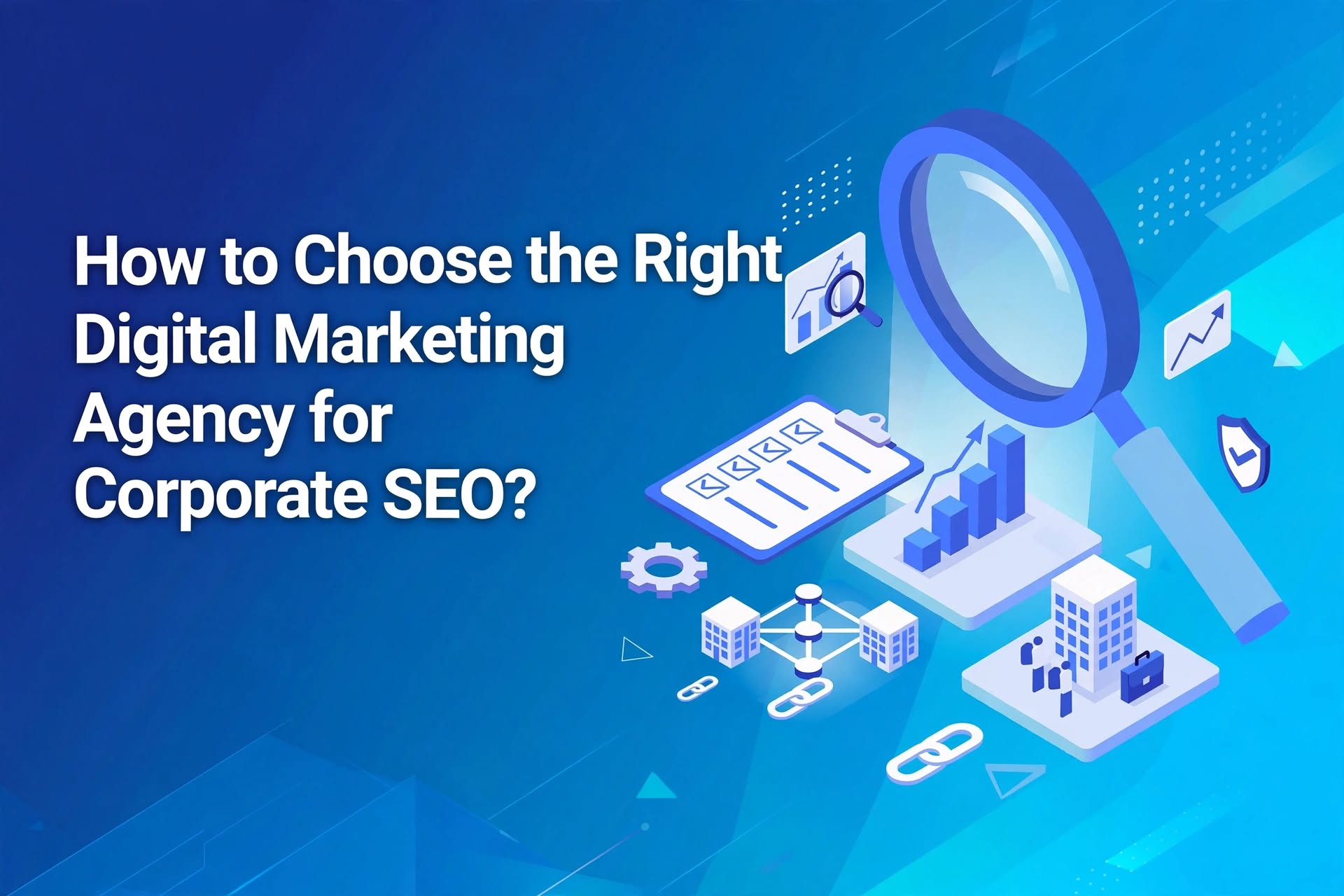
That is why choosing the right digital marketing agency matters so much. The wrong partner can waste months and budget. The right one becomes an extension of your team. Here is a practical framework to help you decide.
1. Understand What Corporate SEO Really Requires
Before evaluating agencies, get clear on what makes corporate SEO different. You are likely dealing with thousands of pages, several departments, multiple regions or languages, complex CMS platforms, and tight brand guidelines. Services typically include technical audits, content strategy, link building, local and international SEO, reporting, and conversion optimization.
An agency that mainly serves small local businesses may struggle with this scale. Look for proven enterprise-level experience.
2. Define Your Goals First
Agencies can only deliver results against clear objectives. Decide what success looks like for your company. It could be higher qualified leads, increased revenue from organic traffic, stronger rankings for competitive terms, better brand visibility, or reduced paid ad dependence.
Avoid vague goals such as "get more traffic." Traffic without conversions does not move the business forward. Tie SEO targets to measurable business outcomes.
3. Check Industry Experience and Track Record
Ask for case studies, client references, and measurable results. The best agencies can show how they grew organic leads, revenue, or visibility for businesses similar to yours. Pay attention to:
- Experience in your industry or a closely related one
- Results over a meaningful timeframe, not just short-term spikes
- Work with companies of comparable size and complexity
- Client testimonials and independent reviews
Rankings alone are not proof of success. Look for evidence of business impact.
4. Evaluate Their Strategy and Process
A credible agency will not offer a one-size-fits-all package. They should begin with discovery: auditing your site, analyzing competitors, and understanding your audience. Ask how they approach keyword research, technical fixes, content planning, and prioritization.
Transparency matters here. A good agency explains what it will do, why, and in what order. If the answer is vague or filled with jargon, treat it as a warning sign.
5. Look for Full-Spectrum Expertise
Modern SEO touches many disciplines. Strong agencies combine technical SEO, content marketing, digital PR and link building, analytics, UX, and conversion rate optimization. They also keep pace with search changes, including AI-driven results and evolving ranking factors.
Even if you only need SEO today, a team with broader digital marketing skills can integrate search with paid media, social, and email for stronger overall performance.
6. Insist on Ethical, White-Hat Practices
Shortcuts like paid link schemes, keyword stuffing, or auto-generated content may produce quick gains, but they risk penalties that damage your brand for years. Ask directly how the agency builds links and creates content. Ethical agencies follow search engine guidelines and focus on sustainable, quality-driven growth.
7. Review Reporting and Communication
Corporate teams need clarity and accountability. Ask what reports you will receive, how often, and which metrics are tracked. Useful reporting goes beyond rankings to include organic traffic, conversions, lead quality, and revenue attribution.
Also assess communication style. You should know who your point of contact is, how often you will meet, and how quickly the agency responds. Smooth collaboration with your marketing, IT, and content teams is essential in larger organizations.
8. Assess Technology and Tools
Enterprise SEO depends on data. Check which tools the agency uses for audits, rank tracking, analytics, and competitive research, and whether they can integrate with your existing systems. Good tooling supports faster insights, but remember that tools do not replace strategic thinking.
9. Compare Pricing and Value, Not Just Cost
Corporate SEO is an investment, and the cheapest option rarely delivers the best return. Compare proposals based on scope, expertise, and expected outcomes. Be cautious of anyone guaranteeing top rankings or overnight results, since no one can control search algorithms. Look for clear pricing, defined deliverables, and flexible contracts.
10. Watch for Red Flags
- Guaranteed #1 rankings or unrealistic timelines
- No case studies or references
- Secretive methods and unclear reporting
- Pushy sales tactics and long lock-in contracts
- Generic proposals that ignore your business needs
Questions to Ask Before You Decide
- Have you worked with companies like ours?
- How will you measure and report success?
- Who will actually manage our account?
- What does your first 90 days look like?
- How do you handle algorithm updates?
Final Thoughts
Choosing a corporate SEO partner is a strategic decision. The best agency combines enterprise experience, transparent processes, ethical practices, and a genuine focus on your business goals. Take time to compare options, ask tough questions, and prioritize long-term partnership over short-term promises.
When you find a team that understands your market and communicates openly, SEO stops being a cost center and becomes a reliable engine for sustainable growth.