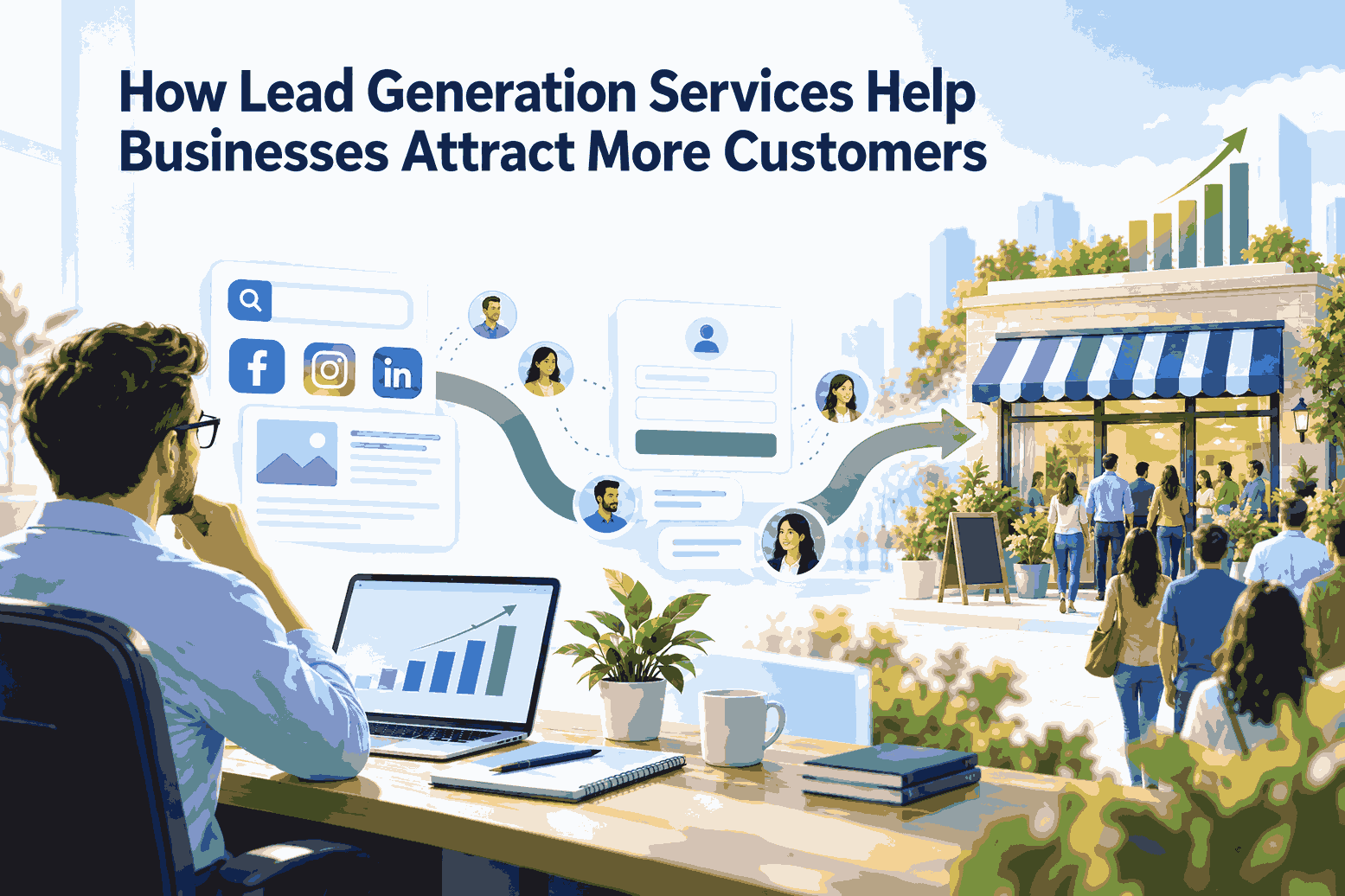
Every business wants a steady flow of customers, yet finding them is harder than ever. Buyers research online, ignore cold calls, and compare several options before they ever speak to a salesperson. Lead generation services close that gap. They find people who are likely to buy, earn their attention, and hand them to your sales team ready for a real conversation. Here is how they work and why they help businesses attract more customers.
What Are Lead Generation Services?
Lead generation services are managed programs that identify potential customers and capture their interest in your product or service. A lead is a person or company that has shown some sign of interest, such as filling out a form, downloading a guide, or replying to an email. Providers handle the research, outreach, and qualification, so your team spends time on real buyers instead of chasing cold names.
Common services include:
- Email and LinkedIn outreach
- Content marketing and gated resources
- Paid ads and landing pages
- Search engine optimization (SEO)
- Appointment setting and telemarketing
- Lead scoring and nurturing
1. They Reach the Right Audience
Marketing to everyone wastes money. Lead generation specialists start by defining your ideal customer: industry, company size, job title, location, budget, and pain points. They then use data tools and targeted channels to reach exactly those people. A software company selling to HR managers at mid-sized firms, for example, gains little from a broad social campaign but a lot from a focused LinkedIn and email sequence.
2. They Fill the Sales Pipeline Consistently
Referrals and word of mouth are valuable but unpredictable. A lead generation service builds a repeatable system, so new prospects enter your pipeline every week. That steadiness makes revenue easier to forecast and removes the feast-and-famine cycle many small businesses face.
3. They Improve Lead Quality Through Qualification
More leads are not always better. A long list of unqualified contacts slows sales teams down. Good providers qualify leads using criteria such as budget, authority, need, and timeline (often called BANT). Lead scoring adds another layer by ranking prospects by behavior, such as pages visited or emails opened. Your reps then call the warmest leads first, which raises conversion rates and shortens the sales cycle.
4. They Save Time and Free Your Team to Sell
Prospecting is time-consuming. Researching contacts, writing outreach, and following up can take hours every day. When you outsource it, your sales team can focus on demos, negotiations, and closing. Many businesses also find this cheaper than building an in-house team, since they pay for results rather than salaries, software licences, and recruitment.
5. They Bring Proven Tools and Expertise
Established providers come with CRM systems, email automation, analytics dashboards, and data sources that would be costly to build alone. They also know what works: which subject lines get opened, which landing pages convert, and which channels suit your industry. You gain that experience without a long learning curve.
6. They Nurture Leads Until They Are Ready to Buy
Most prospects are not ready to buy the first time they hear from you. Lead nurturing keeps your brand in front of them through helpful emails, case studies, webinars, and timely follow-ups. When the prospect finally has a need, your business is already trusted and top of mind. This patient approach often turns "not now" into "yes".
7. They Deliver Measurable Results
Lead generation is easy to track. You can see cost per lead, conversion rate, cost per acquisition, and return on investment. Reports show which campaigns work and which do not, so you can move budget to the best-performing channels. This data-driven approach makes growth more predictable.
How to Choose the Right Lead Generation Partner
Not every provider fits every business. Before signing, check these points:
- Industry experience: Do they understand your market and buyers?
- Lead quality standards: How do they define and verify a qualified lead?
- Transparency: Do you get clear reporting and access to campaign data?
- Compliance: Do they follow data privacy and email rules such as GDPR?
- Pricing model: Is it per lead, per appointment, or a monthly retainer, and does it match your goals?
- Communication: Will you have a dedicated contact and regular updates?
Ask for case studies and references, and start with a small pilot before committing to a long contract.
Common Mistakes to Avoid
- Chasing volume over quality: Fifty qualified leads beat 500 random ones.
- A weak handoff between marketing and sales: Agree on what counts as a qualified lead and how fast follow-up should happen.
- Slow follow-up: Leads that wait days for a reply often go cold.
- Unclear goals: Set targets for leads, meetings, and revenue from day one.
Conclusion
Lead generation services help businesses attract more customers by reaching the right audience, qualifying prospects, nurturing interest, and delivering measurable results. They give your sales team a steady stream of warm opportunities and free up time for what matters most: closing deals and serving customers. If growth has stalled or your pipeline feels unpredictable, the right lead generation partner can turn scattered effort into a reliable system for winning new business.